Our Short List of 3
All 5 Picks at a Glance
| Product | Specs | Action |
|---|---|---|
 1. National Geographic Battery Making Kit | Check price on Amazon | |
 2. 4M Potato Clock | Check price on Amazon | |
 3. EUDAX Fruit Battery Kit | Check price on Amazon | |
 4. Sntieecr Fruit Battery Kit | Check price on Amazon | |
 5. Gejoy 2 Sets Fruit Battery Kit | Check price on Amazon |
Key takeaways
- Best Materials for Homemade Battery: five complete DIY kits with copper and zinc electrodes, wires, and a clock or LED to build a working fruit battery.
Disclosure: As an Amazon Associate, this site may earn from qualifying purchases made through links on this page.
Intro
A homemade battery is one of the simplest science builds there is. Two different metals, an acidic fruit or vegetable, and a wire are enough to make a real cell that powers a clock. The science is the same in every version: the fruit juice acts as the electrolyte, and the two metals act as the electrodes. One metal gives up electrons and the other takes them in, and that flow is the current that drives the clock.
The phrase “best materials for homemade battery” can be read two ways. Loose copper strips, zinc strips, wires, and clips are sold on their own, but they are separate component types, not one coherent product type. This guide reads the keyword the other way: as complete DIY battery-making kits. Each kit ships the electrodes, the wires, and the clock or LED in one box, so the materials arrive matched and ready. You add the fruit or potatoes. That reading keeps every pick the same type, and it is the reading that lets a reader buy one box and build a working battery the same day.
All five picks here are fruit and potato battery science kits. Each one includes copper and zinc electrodes, connecting wires, and a clock or LED that the homemade battery powers. The differences are in what else is included: a voltmeter, a second project, a two-pack for classroom use, or a bigger set of electrodes for more experiments.
At a Glance
- National Geographic Battery Making Kit — Potato clock with voltmeter plus a penny-powered flashlight, magnesium and copper strips, ages 8 and up.
- 4M Potato Clock — Green science potato clock kit with probes, prongs, wiring, and a digital clock, works with many fruits.
- EUDAX Fruit Battery Kit — Four copper sheets, four zinc sheets, two RGB LEDs, one electronic clock, and wires with clips.
- Sntieecr Fruit Battery Kit — Fruit battery science experiment kit with instructions, built around a potato clock.
- Gejoy 2 Sets Fruit Battery Kit — Two complete sets with two electronic clocks, for two builders or a classroom pair.
How to Choose
What is included. The core materials are the same in every kit: two different metals for the electrodes, wires to connect them, and a device to power. Check the box contents before you buy. The EUDAX kit lists four copper sheets and four zinc sheets, so it supports more experiments than a kit with one pair. The National Geographic kit includes a second project, a penny-powered flashlight, so it covers two builds in one box.
Electrodes. Copper and zinc are the standard pair for fruit batteries, and four of the five picks use them. The National Geographic kit uses magnesium and copper instead. Magnesium sits further from copper on the metal reactivity scale, which is why the kit can drive both a clock and a voltmeter reading. Either pair works. What matters is that the kit includes both metals, so you do not need to source strips on their own.
Clock, voltmeter, or LED. Most kits power a small digital clock, which is the clearest proof the battery works. The National Geographic clock doubles as a voltmeter, so you can see the voltage your fruit battery produces. The EUDAX kit adds RGB LEDs, which light up when the circuit is complete. If the goal is a classroom demonstration, a voltmeter or an LED makes the result visible to a group. If the goal is a first build at home, a clock is enough.
Fruit range. Every kit here works with potatoes, and most also work with lemons, oranges, apples, tomatoes, pears, pineapples, and salt solutions. A wider fruit range means more experiments from one kit. If you plan to compare fruits, pick a kit with more electrode pairs, since each fruit needs its own pair.
Age range. These are practical science kits with small parts. The National Geographic kit is marked for ages 8 and up with adult supervision. The 4M kit is aimed at kids and teens. Adult supervision is a good idea for younger builders, mainly for the small screws and the thin metal strips.
One build or two. The Gejoy two-set kit ships two complete kits in one box, with two electronic clocks. That suits a household with two children, or a teacher who wants a spare set. For a single builder, a one-kit pick is enough.
The Picks
1. National Geographic Battery Making Kit
The National Geographic Battery Making Kit is the most complete pick in this guide. It includes two science projects in one box: a potato clock with a voltmeter, and a penny-powered flashlight. The potato clock uses magnesium and copper strips as the electrodes, and the clock doubles as a voltmeter, so you can read the voltage your homemade battery produces. The flashlight project builds a coin battery from copper and steel coins, which shows a second way to make a cell from everyday materials.
The kit measures 10.04 by 7.28 by 2.17 inches and weighs 12.6 ounces. It is marked for ages 8 and up with adult supervision. The clock unit also has a compartment for two AAA cells, which the manual lists among the items needed for setup. You supply two potatoes and the AAA cells. Everything else, including the magnesium strips, copper strips, wires, and the flashlight parts, is in the box.
This is the pick for a reader who wants the fullest introduction to homemade batteries. The voltmeter turns a fun build into a measurable experiment, and the second project keeps the kit useful after the first clock is running. It is also the pick for a classroom, where two projects from one box stretch the materials further.
View the National Geographic Battery Making Kit on Amazon
2. 4M Potato Clock
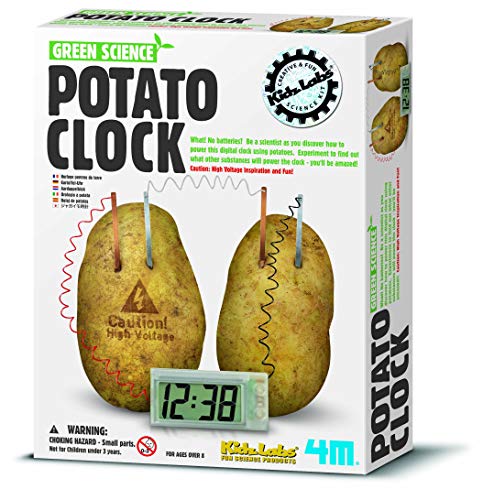
The 4M Potato Clock is the best-known potato battery kit on the market, and it is the simplest pick here. The box holds the probes, prongs, and wiring needed to build a working clock, plus a small digital clock and a set of lesson materials that explain the science behind the build. You supply the potatoes. The kit is part of the 4M Green Science range, which frames the build as a green experiment: the power comes from the potatoes, not from a wall socket or a disposable cell.
The 4M kit works with more than potatoes. The same electrodes and wires also work with apples, oranges, tomatoes, pears, pineapples, lemons, and salt solutions, so one kit supports a run of experiments. The clock is the only device to power, which keeps the build short and easy to follow. That makes it a good first kit for a younger builder, or for a parent who wants a weekend project without a long instruction booklet.
This is the pick for a first homemade battery. It is simple, it is widely used in classrooms, and the lesson materials give a young builder the why behind the build, not just the how.
View the 4M Potato Clock on Amazon
3. EUDAX Fruit Battery Kit
The EUDAX Fruit Battery Kit is the pick for readers who want more electrodes and more experiments from one box. The package includes four copper sheets, four zinc sheets, two RGB LEDs, one electronic clock, four wires, and two wires with clips. That is twice the electrode count of most single kits, so you can build several fruit cells at once and link them together.
The kit measures 6.02 by 3.15 by 1.1 inches and weighs 1.13 ounces, which makes it the lowest-weight pick here. It works with apples, oranges, potatoes, lemons, tomatoes, cola, pears, pineapples, and salt solutions. The RGB LEDs give a second way to see the result: when the circuit is complete and the cell produces enough current, the LED lights up. That is a clear visual payoff for a group demonstration, where a small clock face can be hard to see from the back of a room.
The listing notes that you should read the instructions carefully before building, to avoid damage to the electronic clock or the LED. That is good advice for any fruit battery build, and it matters more here because the kit has more parts to connect. Follow the wiring steps in order, and the build comes together cleanly.
View the EUDAX Fruit Battery Kit on Amazon
4. Sntieecr Fruit Battery Kit
The Sntieecr Fruit Battery Kit is a potato science experiment kit built around a digital clock. It ships the electrodes, wires, and clock needed to build a fruit battery, with an instruction sheet that walks through the build. The design is close to the EUDAX kit in shape, but it is sold as a single focused kit rather than a multi-electrode set.
This pick suits a reader who wants a straightforward fruit battery kit without the extra LEDs or the second project. It is a single-build kit: one set of materials, one clock, one experiment. For a birthday gift or a school project with a firm deadline, that focus is a strength. There are no extra parts to sort and no second build to plan.
View the Sntieecr Fruit Battery Kit on Amazon
5. Gejoy 2 Sets Fruit Battery Kit
The Gejoy 2 Sets Fruit Battery Kit ships two complete fruit battery kits in one box, with two electronic clocks. Each set includes the electrodes, wires, and clock needed for an orange, potato, or lemon battery experiment. The two-set format is the point: two builders can each run their own experiment side by side, or one builder can keep a spare set for a second round.
This pick suits a household with two children, a teacher who wants a pair for a classroom, or a reader who wants to compare two fruits at the same time. A single fruit cell produces around 0.8 to 1.0 volts, and linking cells in series raises the voltage, so two sets also let you run a bigger series experiment than a single kit allows. For a single builder who only needs one clock, the other picks are a better fit.
View the Gejoy 2 Sets Fruit Battery Kit on Amazon
Comparison Table
| Pick | Electrodes | Devices Powered | Extras | Best For |
|---|---|---|---|---|
| National Geographic | Magnesium + copper strips | Clock with voltmeter, penny flashlight | Two projects in one box | Fullest introduction, classroom |
| 4M Potato Clock | Copper + zinc probes | Digital clock | Lesson materials | First build, younger builders |
| EUDAX Fruit Battery Kit | 4 copper + 4 zinc sheets | Electronic clock, 2 RGB LEDs | Extra electrode pairs | Most experiments, group demo |
| Sntieecr Fruit Battery Kit | Copper + zinc electrodes | Digital clock | Instruction sheet | Single focused build |
| Gejoy 2 Sets | Copper + zinc electrodes | 2 electronic clocks | Two complete sets | Two builders, side-by-side comparison |
Which One Fits Your Situation
A first build at home. The 4M Potato Clock is the natural pick. It is simple, it is widely used, and the lesson materials explain the science. One kit, one clock, one afternoon.
A classroom or a science fair. The National Geographic kit is the pick. The voltmeter turns the build into a measurable experiment, and the second project gives the kit a longer life. The EUDAX kit is the alternative if you want more electrode pairs for a group, since four copper and four zinc sheets support several cells at once.
Comparing fruits side by side. The Gejoy two-set kit is the pick. Two complete sets mean two builders can run their own experiments at the same time, or one builder can link cells in series and see how the voltage adds up.
A group demonstration. The EUDAX kit is the pick. The RGB LEDs light up when the circuit is complete, which the whole room can see, and the extra electrodes let you build more than one cell for the demo.
A single focused gift. The Sntieecr kit is the pick. One set of materials, one clock, and a clear instruction sheet. It is the simplest box to hand to a young builder.
FAQ
Do the kits include the fruit?
No. Every kit here includes the electrodes, wires, and clock or LED, and you supply the fruit or potatoes. Potatoes, lemons, oranges, and apples all work. A fresh, firm fruit gives a better result than one that is soft or dried out.
How much voltage does one fruit cell produce?
A single fruit cell produces around 0.8 to 1.0 volts. That is enough to drive a small digital clock when the circuit is right, but it is a small amount of power. Linking cells in series adds the voltage together, which is why kits with more electrode pairs can power more.
Why do the kits use two different metals?
A battery needs two different metals because the voltage comes from the difference between them. One metal gives up electrons and the other takes them in, and the fruit juice carries the charge between them. Copper and zinc are the standard pair. The National Geographic kit uses magnesium and copper, which gives a larger difference and a stronger reading on its voltmeter.
Can I reuse the kit?
Yes. The electrodes, wires, and clock can be used again with fresh fruit. Rinse and dry the metal strips after each build, and store them flat so they do not bend. The fruit itself is used up in the experiment and goes in the compost or the bin.
Do I need any tools?
Most kits need no tools beyond what is in the box. The National Geographic kit lists a small Phillips screwdriver among the setup items, for the battery compartment cover on the clock. Keep one handy before you begin.
Is it safe for children?
These kits are designed for young builders with adult supervision. The voltages involved are tiny, far below anything that could cause harm. The main care points are the small parts and the thin metal strips, which is why the National Geographic kit is marked for ages 8 and up.
Final Take
The best materials for a homemade battery arrive as a matched set, not as loose parts. A complete kit gives you the electrodes, the wires, and the clock or LED in one box, and the only thing you add is the fruit. That is what makes the build work on the first try.
For most readers, the 4M Potato Clock is the right starting point: simple, proven, and easy to follow. If you want the fullest introduction, with a voltmeter and a second project, the National Geographic kit is the pick. The EUDAX kit is the choice for more experiments and group demos, the Gejoy two-set kit is the choice for two builders, and the Sntieecr kit is the choice for a single focused build. Pick the one that matches who is building and why, and the fruit in the kitchen becomes a working battery before the afternoon is over.