
Key takeaways
- Pro: A six-inch random orbital design is the classic learner format, with plentiful pad and polish options available from many brands.
- Pro: Buying from a detailing-focused company usually means matching pads and polishes are easy to find and learning resources are close at hand.
- Con: Detailing brands often position at a mid-range tier, so it may cost more than a bare-bones tool-company machine.
A first-time detailer usually starts the same way: a black hood covered in swirl marks, a bottle of polish, and a fear of burning through the paint. The fix is almost always the same too. Skip the old-school rotary buffer and learn on a dual action polisher, a machine that oscillates and spins at once, spreading heat and friction so mistakes are far harder to make than with a fixed-spin tool.
This guide covers six dual action and random orbital machines from established detailing and tool brands, with advice on size, pad compatibility, speed control, and cord or weight comfort. As of 2026 the category still rewards the same learning path: start with a six-inch machine, a soft foam pad, and a small test panel. Below you will find a quick comparison, four buying rules, honest trade-offs for each machine, and the mistakes that trip up most new owners.
Quick Picks
| Product | Best for | Worth knowing |
|---|---|---|
| Griot’s Garage 6-Inch Random Orbital Polisher | Hobbyists who want a dedicated detailing brand | Six-inch size is stated in the name |
| Porter-Cable 7424XP 6-Inch Random Orbital Polisher | Learners on a modest tool budget mindset | A long-established model number with a six-inch size |
| Meguiar’s MT300 Dual Action Polisher | Owners already using Meguiar’s polish and pads | Dual action design named outright |
| Chemical Guys TORQX Random Orbital Polisher | Beginners who like a full-brand product ecosystem | Random orbital, so it spins and oscillates |
| Rupes LHR15 Mark III Random Orbital Polisher | Learners who expect to keep detailing for years | Professional-leaning brand with a random orbital action |
| Flex PE14-2-150 Polisher | Users comfortable with a heavier tool brand | The 150 in the model name matches a six-inch pad size |
How to Choose
Action type: dual action over rotary
For a newcomer, the safest bet is a random orbital or dual action polisher, since the pad wobbles as it spins and heat stays low. Rotary machines remove defects faster but can strip clear coat in seconds when held still. A good rule of thumb is to avoid any machine that only offers a fixed circular spin until you have logged several full-vehicle sessions.
Pad size and throw
Six-inch backing plates are the default because they fit most body panels and have the widest pad selection. Smaller three-inch plates reach tight areas but take forever on a hood. Look for a throw, the width of the oscillation, between roughly 8 mm and 15 mm for beginners; short throws feel calm, long throws cover more ground quickly but demand better technique.
Speed control and power
Variable speed dials, usually numbered one to six, let you start slow while spreading polish and increase only when working it in. Choose a machine whose lowest setting is easy to hold on a vertical panel without bouncing. A cord of around eight to ten feet or longer prevents constant extension cord juggling around a full-size car.
Weight, grip, and noise
Fatigue creates mistakes. Polishers in the five-to-seven-pound range are manageable for a Saturday session, while heavier machines tire your wrist on roof panels. Check that the handle can be placed on either side or has a side grip, and that the trigger lock suits both left- and right-handed use. Low vibration matters more than top speed. A simple test is to hold the machine at arm’s length against a wall for thirty seconds; if your forearm burns, a full hood will be miserable. Also confirm a pad can be swapped without tools, since you will change pads several times per panel.
Our Picks Reviewed
Griot’s Garage 6-Inch Random Orbital Polisher
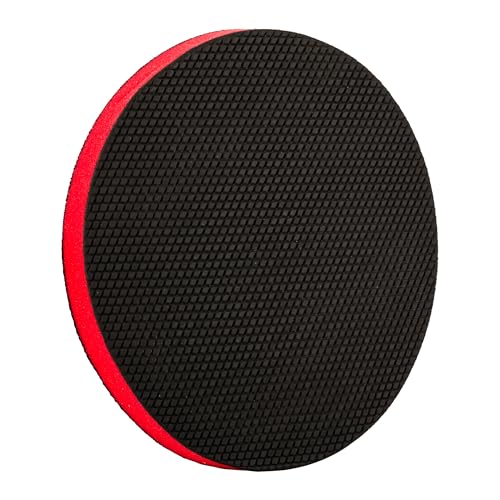
Griot's Garage Surface Prep Pad, Clay Bar Alternative for Car Detailing, Cleaning, Polishing and Paint Correction, Compatible with G9 Random Orbital Polisher, 6", 10680


As an Amazon Associate we earn from qualifying purchases. Product prices and availability are accurate as of the date/time indicated.
Griot’s Garage is a brand built around home detailing, and this six-inch random orbital machine is aimed squarely at hobbyists learning to remove swirls.
- Pro: A six-inch random orbital design is the classic learner format, with plentiful pad and polish options available from many brands.
- Pro: Buying from a detailing-focused company usually means matching pads and polishes are easy to find and learning resources are close at hand.
- Con: Detailing brands often position at a mid-range tier, so it may cost more than a bare-bones tool-company machine.
Skip it if you only plan to polish one car once, since renting or borrowing a machine may serve that single job better than owning a dedicated tool for years afterward. Also skip it if you prefer a cordless setup, because a corded machine tethers you to an outlet and keeps you moving the cable around the car as you work each panel.
Porter-Cable 7424XP 6-Inch Random Orbital Polisher

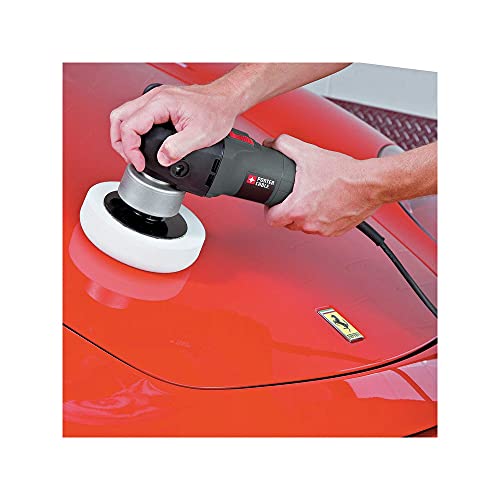
PORTER-CABLE Buffer Polisher, Car Polisher for Car Detailing, 6-Inch, Orbital, Variable Speed (7424XP)



As an Amazon Associate we earn from qualifying purchases. Product prices and availability are accurate as of the date/time indicated.
The 7424XP has been a staple of garage detailing for years, and the name tells you exactly what you get: a six-inch random orbital polisher from a power tool maker.
- Pro: A model number this familiar means countless tutorials, pad guides, and owner discussions exist for it, which helps a beginner troubleshoot.
- Pro: Power tool brands tend to stock replacement parts and accessories widely, so repairs are not a mystery.
- Con: Tool-brand polishers are general-purpose and may feel less refined in grip and balance than detailing-specific designs.
Skip it if you want the lightest, most compact machine for tight work, or if you expect to graduate to professional-level paint correction quickly and would rather start on a premium tool. People who want a quieter, more polished-feeling grip may also prefer to handle a few machines in person first before settling on this one.
Meguiar’s MT300 Dual Action Polisher
Meguiar’s pairs a name every car-care aisle knows with a dual action design, which is exactly the safe-learning category this guide favors.
- Pro: Dual action is the beginner-friendly format, spreading heat so a slip is unlikely to ruin paint.
- Pro: If you already own Meguiar’s polishes and foam pads, matching products for the same brand keeps the learning curve simple.
- Con: A single-brand ecosystem can push you toward that brand’s pads and compounds when other makers might suit your car better.
Skip it if you want a polisher for heavy defect removal on very hard clear coats, where a bigger-throw machine or a more specialized product may cut faster. It is also a weaker match for buyers who plan to work for hours at a time on larger vehicles such as full-size trucks and vans.
Chemical Guys TORQX Random Orbital Polisher

Chemical Guys Car Polisher, TORQX Random Orbital Polisher Kit, 9-Piece | Dual action polisher for car detailing, beginner-friendly, smooth paint correction, swirl and scratch removal


As an Amazon Associate we earn from qualifying purchases. Product prices and availability are accurate as of the date/time indicated.
Chemical Guys sells polishers alongside a huge line of pads and chemicals, and the TORQX is a random orbital machine sold under that umbrella.
- Pro: Random orbital action keeps the pad moving on two axes, which is forgiving when you tilt the machine slightly.
- Pro: Beginners can buy matching pads and compounds from the same brand, which cuts guesswork about what works with what.
- Con: Brand-ecosystem kits can bundle accessories a beginner does not need, so read the package contents carefully.
Skip it if you want a machine with a long record of independent professional use, since most people reach for dedicated pro brands once they start doing paid work. Anyone who dislikes shopping within a single brand universe, or who already owns pads from other makers, may find the packaging and kit contents less useful.
Rupes LHR15 Mark III Random Orbital Polisher

RUPES BigFoot LHR15 Mark V Random Orbital Polisher - Tool Only | Includes PrecisionPro Backing Plate | Compact Design | Reduced Vibration | Enhanced Ventilation | Anti-Spinning Ring


As an Amazon Associate we earn from qualifying purchases. Product prices and availability are accurate as of the date/time indicated.
Rupes is a detailing-industry name, and the Mark III designation signals a mature, refined version of this random orbital machine.
- Pro: A pro-leaning brand means the machine will not feel outgrown when your skills improve, so it can serve for many years.
- Pro: Random orbital action keeps the learning curve gentle for new users even on a premium tool.
- Con: Professional brands typically cost more than entry-level options, which may be hard to justify before you know you enjoy detailing.
Skip it if you are unsure you will keep up the hobby, or if you want to experiment cheaply before committing to a premium tool. A starter machine from a tool brand fits that mindset better, and the money saved can go toward quality pads, polish, and a work light, which affect results more than most beginners expect.
Flex PE14-2-150 Polisher
Flex is a German-heritage tool maker, and the 150 in this model name lines up with a 150 mm, or roughly six-inch, pad size.
- Pro: Tool-focused engineering usually means a solid, durable body that holds up to repeated weekend use.
- Pro: A 150 mm format matches the standard pad size, so finding foam and microfiber pads is easy.
- Con: Tool-maker machines can feel heavier or more serious than hobby-oriented models, which new users sometimes find tiring on large roof panels.
Skip it if you want a lightweight, low-vibration first machine for small sessions, or if you are shopping strictly for the most compact tool available. Smaller owners with limited wrist strength should also weigh how a sturdier body feels over a full afternoon of overhead and vertical panel work.
Which One Fits
- First-time hobbyist wanting a brand with learning material: Griot’s Garage or Meguiar’s MT300.
- Budget-minded learner who wants a classic: Porter-Cable 7424XP.
- Someone planning to detail for years: Rupes LHR15 Mark III.
- Owner already stocked with a product ecosystem: Chemical Guys TORQX.
- Comfortable with a more tool-style machine: Flex PE14-2-150.
- Planning to learn on a single dark-colored daily driver: any of the six works, so let grip comfort and available pads break the tie.
- Need a machine that two household members will share: favor a model with an adjustable side handle so both can hold it comfortably.
Common Mistakes
- Starting with a rotary machine because videos make it look fast.
- Using too much polish, which clogs the pad and reduces cutting action.
- Pressing hard instead of letting the machine do the work.
- Skipping a test spot and polishing a full panel before checking results.
- Working on a hot panel in direct sun, which dries polish too quickly.
FAQ
Is a dual action polisher safe for new users?
It is the safest common format because the pad oscillates, which spreads friction and heat. Careless pressure on edges can still cause trouble, so keep to flat panels first.
Do I need different pads for polish and wax?
Yes. Cutting, polishing, and finishing foam pads have different firmness. Using one pad for everything wastes product and limits results. Clean pads often with a brush or compressed air during a session, because caked-on residue makes any polisher feel less effective than it really is.
How often should I polish my car?
Most owners polish once or twice a year to remove swirls, and wax or seal more often. Frequent aggressive polishing removes clear coat, so only do it when defects are visible.
Can I polish a hail-covered car?
Polishing cannot fix dents. If storms are your concern, read our look at hail car covers before the next season.
What else do I need beyond the machine?
Painter’s tape, microfiber towels, polish, and a good light. For truck owners adding upgrades after a polish session, check the truck step guide for lifted trucks too.


