Key takeaways
- Pro: The folding design means it can travel in a rig storage space or be stowed in a tow vehicle, which matters for people without a rack.
- Pro: A direct-to-rider brand often keeps the buying process simple, with clear sizing and straightforward product pages to compare against your space.
- Con: Folding frames still carry real weight, so lifting one into a high compartment alone can be hard for some riders.
Picture a campground at the end of a long driving day: the rig is leveled, the awning is out, and the nearest grocery store sits four miles down a country road. Folding electric bikes solve exactly that gap. They tuck into a storage bay, a closet, or the back of a tow vehicle, and they come out when you want a quick ride to the camp store, a trailhead, or a boat ramp without unhitching anything.
Not every folder suits motorhome life, though. Weight, folded footprint, battery handling, and how you plan to carry the bike all matter more on the road than they do at home. This guide compares six folding e-bike options from known brands, explains four buying rules that are checkable on any spec sheet, and flags the trade-offs a camper should weigh. As of 2026, the useful question is less about top speed and more about whether you can lift the bike into the rig alone.
Quick Picks
| Product | Best for | Worth knowing |
|---|---|---|
| Lectric XP 3.0 Folding Electric Bike | Campers who want a folding model from a direct-to-rider brand | Version 3.0 in the name marks a later generation of the model |
| Heybike Mars 2.0 Folding Electric Bike | First-time e-bike buyers going camping | The 2.0 label signals a revised design |
| Rad Power Bikes RadMini Folding Electric Bike | Riders who want a compact version of a larger brand lineup | The Mini name points to the smaller-format model |
| Ride1Up Portola Folding Electric Bike | Commuter-style riders who also camp | Folding is part of the product line itself |
| Aventon Sinch.2 Folding Electric Bike | Owners who like a mainstream e-bike brand | The .2 suffix marks a second generation |
| Brompton Electric C Line | Tight storage bays and premium-minded buyers | Part of a brand known for compact fold designs |
How to Choose
Weight you can actually lift
Folding e-bikes often weigh between roughly 30 and 70 pounds, and the heavy end is a real problem when you must lift one over a bumper or into a bay. A practical rule: if you cannot comfortably lift it with a straight back to waist height, plan for a ramp, a hitch carrier rated well above the bike weight, or choose a lighter model.
Folded size versus your storage space
Measure the opening of your bay or closet before you buy. Compare it with the folded length, width, and height on the spec sheet and leave an inch or two of margin for pedals and handlebars. Smaller wheels, usually 16 or 20 inches, fold tighter. Wider fat-tire folders ride rougher gravel more comfortably but take up more room when stowed.
Battery handling and campsite charging
Removable batteries are handy because you can charge indoors and avoid leaving a cold or hot pack in an outside compartment. A battery in the 400 to 700 watt-hour range is a reasonable target for casual campground riding, but check the charger rating against your electrical setup. Look for a lock on the battery and a charging port that is easy to reach on a folded bike.
Rack and hitch compatibility
If the bike travels outside, it needs a hitch or bumper rack with a weight limit above the bike weight plus a margin. Tray-style hitch racks suit wider tires. Check the rack’s fit for folded or unfolded carry, and look at how the rack handles bumps, since constant vibration can loosen bolts and straps over a few hundred miles of highway, and use a cover or lock to protect the motor, battery, and display from road grime and theft at overnight stops.
Our Picks Reviewed
Lectric XP 3.0 Folding Electric Bike
Lectric is a direct-to-rider e-bike brand, and the XP 3.0 is a folding model, which makes it a natural candidate for camper storage and short campground errands.
- Pro: The folding design means it can travel in a rig storage space or be stowed in a tow vehicle, which matters for people without a rack.
- Pro: A direct-to-rider brand often keeps the buying process simple, with clear sizing and straightforward product pages to compare against your space.
- Con: Folding frames still carry real weight, so lifting one into a high compartment alone can be hard for some riders.
Skip it if your storage bay is very small or you need something truly featherweight to lift by yourself every day, because a lighter or tighter-folding model fits that situation better. Riders who mostly pedal on pavement and never leave the campground road may also be happy with something simpler.
Heybike Mars 2.0 Folding Electric Bike
Heybike sells e-bikes aimed at newcomers, and the Mars 2.0 name tells you this is a revised folding model in that lineup.
- Pro: A folding frame fits the tight storage most RVers deal with, from rear bays to bed-of-the-truck space.
- Pro: A brand that focuses on first-time buyers usually keeps controls and setup approachable for people who rarely ride.
- Con: Entry-focused brands may offer fewer dealer service points on the road, so repair help after a breakdown could be harder to find.
Skip it if you plan long hauls on steep, rough terrain every day, since you will want to confirm range and motor fit for that use instead of relying on the model name. Also skip it if you want in-person service support along a road trip route, since an online-first brand means most fixes happen by mail or video call.
Rad Power Bikes RadMini Folding Electric Bike
Rad Power Bikes builds a broad e-bike lineup, and the RadMini is the folding, compact member of that family.
- Pro: A mini format generally means a shorter wheelbase and a smaller packed shape, helpful when bay space is limited.
- Pro: Part of a larger brand lineup, so accessories such as racks and bags are commonly available for it.
- Con: Compact bikes can feel twitchy for tall riders, and a small frame limits comfort on long rides around a sprawling campground.
Skip it if you are a taller rider who wants an upright, roomy posture, or if you need a bike that doubles as your main commuter at home. A full-size folder or non-folding model fits that need better. Households that want one bike to share between a very tall and a much shorter rider should also test saddle and bar adjustment range before committing to a small frame.
Ride1Up Portola Folding Electric Bike
Ride1Up is known for commuter-focused e-bikes, and the Portola is a folding model in that range.
- Pro: Folding makes it easier to store under a dinette bench, in a closet, or behind a seat in a tow vehicle.
- Pro: A commuter-focused brand suggests everyday usability beyond camping, so the bike earns its keep at home too.
- Con: Commuter styling is not the same as an off-road design, so loose gravel and sand trails may feel rough.
Skip it if your camping involves a lot of unpaved trail or beach riding, or if you want a heavy-duty cargo setup. A fat-tire folder or a rugged hardtail suits those routes better. Riders who plan to haul groceries, a cooler, or a child seat on every outing should also confirm rack mounts exist before choosing a commuter-style folder.
Aventon Sinch.2 Folding Electric Bike

Bike Cover for Aventon Sinch (Electric Folding Bike) | Bike Cover Waterproof Outdoor for 1-2 Bikes, Rain Sun UV Dust Wind Proof with Storage Bag for Mountain Road Electric Bikes


As an Amazon Associate we earn from qualifying purchases. Product prices and availability are accurate as of the date/time indicated.
Aventon is a mainstream e-bike company, and the Sinch.2 name marks the second generation of its folding model.
- Pro: A second-generation product often means the maker has already refined early quirks of the first version.
- Pro: Folding construction keeps it manageable for bays, closets, and trunk space in a tow vehicle or small trailer.
- Con: Mainstream folding bikes still need a plan for lifting and securing them, and a bumper rack may need extra straps for stability.
Skip it if your storage space is smaller than the folded footprint on the spec sheet, which is worth checking carefully. Anyone who wants an ultra-compact, brief-case style fold should also consider a smaller-wheel option. People who dislike fiddly latches may find any folding mechanism an annoyance after the fifth time they set it up at a campsite, and a fixed-frame bike on a rack could suit them better.
Brompton Electric C Line
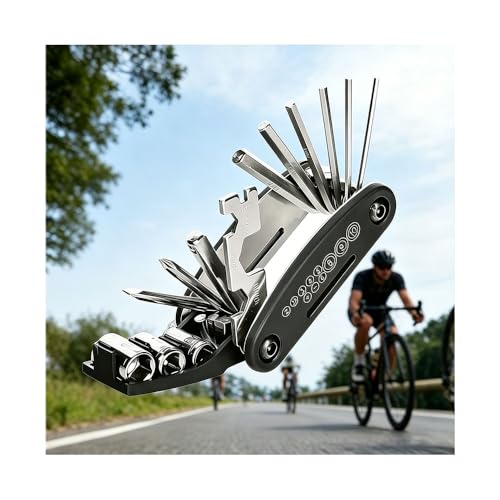
XCVBWE 16-in-1 Portable Bicycle Repair Kit for Brompton Electric C Line 4-Speed Bike Multitool Compact Cycling Maintenance Tools


As an Amazon Associate we earn from qualifying purchases. Product prices and availability are accurate as of the date/time indicated.
Brompton is a name tied to compact folding, and the Electric C Line is its electric version of the classic city folder.
- Pro: A brand built around tiny folds is a strong match for tight cabinets, storage bays, and small camper vans.
- Pro: Premium-minded engineering is a plus for owners who keep a bike for many seasons of travel.
- Con: Premium folding bikes usually cost a lot more than mainstream alternatives, which is a heavy investment for occasional campground use.
Skip it if you want a rugged all-terrain bike for gravel roads, or if you ride only a few times a season and want to keep spending low. A basic folding model fits that mindset better. It is also a questionable fit for owners who leave bikes strapped outside year-round, where a premium finish takes the same weather beating as a cheaper machine.
Which One Fits
- Tight storage bay or camper van: Brompton Electric C Line or the RadMini.
- First e-bike for casual campground rides: Heybike Mars 2.0.
- Daily commuter that also goes camping: Ride1Up Portola or Aventon Sinch.2.
- Rider who wants a well-known folding model: Lectric XP 3.0.
- Couple traveling with two bikes: pick two matching folders so you carry one set of spare parts and one charger type.
- Camper who rides mostly paved park loops and visitor-center roads: any of the commuter-style folders on this list will do, so let storage fit decide.
- Full-timer who needs a car-free errand bike for months at a stretch: favor the sturdier, better-supported brand and budget for a quality lock.
Common Mistakes
- Ignoring the weight and trying to lift a heavy bike into a high bay alone.
- Buying before measuring the storage opening and folded dimensions.
- Assuming any hitch rack will hold an e-bike when most have weight limits.
- Leaving the battery in extreme heat or cold inside an outside compartment.
- Skipping a wheel lock at overnight stops because the campground feels safe.
FAQ
Are folding e-bikes strong enough for hills?
Many handle moderate grades fine, but small-wheel folders and smaller motors may struggle on long steep climbs. Check motor and battery details before buying for mountain campgrounds.
Can I charge the battery from my RV outlet?
Usually yes, using a standard household-style outlet or inverter, as long as the charger draw fits your system. Power protection also matters, so see our guide to campground surge protectors.
Do I need a license to ride one at a campground?
Rules vary by state and campground. Pedal-assist bikes are often treated like regular bikes, but check local regulations and any park limits on motor power.
What about carrying a bike on a truck?
Bed racks and hitch trays both work. Taller lifted trucks may need a step for loading, so a look at truck steps for lifted trucks can help.
How do I protect the bike from theft?
Use a cable or U-lock with the bike secured to the rig, remove the battery at night, and keep the bike out of sight when parked at roadside stops.