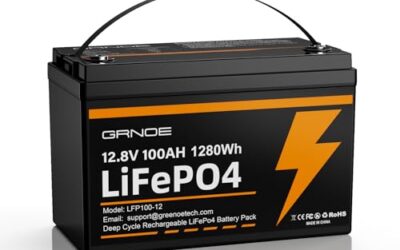
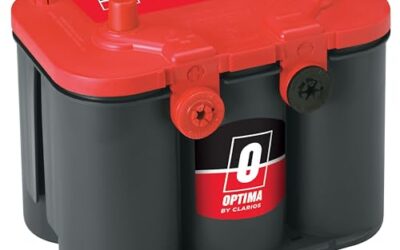
Our Short List of 3

All 5 Picks at a Glance
| Product | Specs | Action |
|---|---|---|
| 1. OPTIMA D31M BLUETOP — Best Dual-Purpose Battery for Larger Saltwater Boats | Check price on Amazon | |
 2. OPTIMA D34M BLUETOP — Best Compact Dual-Purpose Battery | Check price on Amazon | |
 3. Interstate 31M-AGM-A — Best High-Capacity Dual-Purpose Battery | Check price on Amazon | |
 4. Renogy Deep Cycle AGM 100Ah — Best House Battery for Trolling and House Loads | Check price on Amazon | |
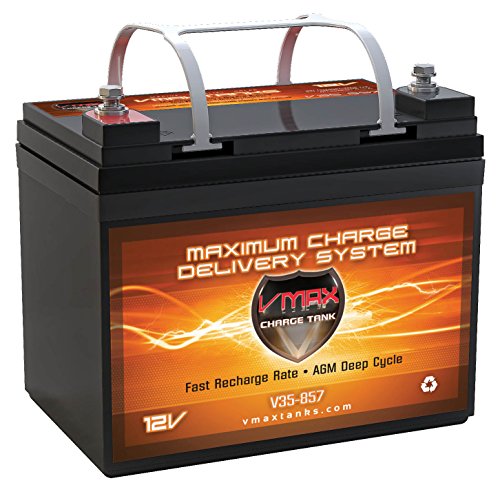 5. VMAXTANKS V35-857 — Best Small Battery for Kayaks and Light Trolling Motors | Check price on Amazon |
Key takeaways
- The best saltwater battery picks are sealed marine AGM batteries that keep acid in and spray out: five 12V options for starting, trolling motors and house loads, compared by capacity, cranking amps and group size.
As an Amazon Associate we earn from qualifying purchases.
Salt water is patient. It creeps into battery compartments as spray and damp air, settles on terminals, and starts the slow green corrosion that ends with a motor that will not crank on the one morning the fish are running. A battery for saltwater use is not a special chemistry with a nautical label. It is a marine battery built to survive that environment: a sealed case that cannot spill acid when the boat rolls, no caps to top up with water, terminals and hardware that resist corrosion, and a case and internals that tolerate vibration and pounding in a chop. Every pick in this guide is a sealed AGM (absorbed glass mat) marine battery for exactly those reasons.
Affiliate Disclosure: This article contains affiliate links to products on Amazon. If you buy through a link on this page, we may earn a commission at no additional cost to you. Product specifications are taken from the manufacturers’ and retailers’ published listing data, and availability should be confirmed on the product page before ordering, because marine battery listings change.
A note on how these picks were checked: each battery below was matched against its Amazon US listing data, including its ASIN, group size and published ratings. Where a live product page could not be fully re-read at the time of writing, the pick is included on the strength of its indexed listing data and the manufacturer’s published specifications, and we say plainly in the buying guide that you should confirm stock and the exact variant on the product page before you buy. We have not tested these batteries ourselves, and no practical claim is made anywhere in this article.
Quick Comparison
| Pick | Best for | Capacity | Cranking | Group size |
|---|---|---|---|---|
| OPTIMA D31M BLUETOP | Starting plus heavy house loads | Deep-cycle dual purpose | 900 CCA | Group 31 |
| OPTIMA D34M BLUETOP | Compact dual-purpose power | 55 Ah | 750 CCA | Group 34M |
| Interstate 31M-AGM-A | High-capacity dual purpose | 100 Ah | 825 CCA | Group 31M |
| Renogy Deep Cycle AGM 100Ah | House bank and trolling endurance | 100 Ah | 1100A max discharge | Group 31 class |
| VMAXTANKS V35-857 | Small trolling motors and kayaks | 35 Ah | Deep cycle | Group U1 |
What Salt Water Demands From a Battery
Before the picks, it helps to know what you are actually shopping for, because the wrong lesson from a flooded battery failure is to buy a bigger battery when you should have bought a sealed one.
Sealed construction comes first. In an AGM battery the electrolyte is held in glass mat separators rather than sloshing free inside the case. There is nothing to spill when the boat heels or the battery box takes a knock, no water level to check, and far less acid mist escaping to attack the terminals from inside the compartment. In a saltwater boat, where the compartment already breathes damp, salty air, removing the battery’s own contribution to corrosion matters.
Cranking and cycling are different jobs. A starting battery is rated in cold cranking amps (CCA) and marine cranking amps, and its job is a short, violent burst. A deep-cycle battery is rated in amp-hours (Ah) and reserve capacity, and its job is the long, steady drain of a trolling motor, livewell, lights and electronics. Dual-purpose marine batteries try to do both, and they are the practical choice for a single-battery boat. A two-battery boat does better with a dedicated starting battery and a dedicated deep-cycle house battery.
Terminals are the weak point. Salt corrosion attacks the connection, not the case. Look for marine batteries with proper marine terminals or dual posts, keep connections tight, protect them, and rinse and dry the compartment when you wash the boat down. No battery in this guide — or anywhere — makes a neglected terminal immune to salt air.
Size and weight decide what fits. Marine batteries are sold by BCI group size. Group 31 is the large standard for serious house and dual-purpose duty, Group 24 and 27 sit below it, and small Group U1 batteries serve little trolling motors and kayaks. Measure your battery box, including height with cables attached, before ordering anything.
1. OPTIMA D31M BLUETOP — Best Dual-Purpose Battery for Larger Saltwater Boats
The D31M is the largest of OPTIMA’s dual-purpose BLUETOP marine batteries, and it is the pick for a center console or larger boat that asks one battery to start the engine and then run a trolling motor and a full spread of electronics. The listing data gives it 900 cold cranking amps, a sealed AGM spiral-cell construction, dual terminals, and a case measuring roughly 12.8 by 6.5 by 9.4 inches at just under 60 pounds.
The spiral-cell design is OPTIMA’s signature: the lead plates are wound rather than stacked flat, and the manufacturer credits that construction with strong vibration resistance — OPTIMA’s product description claims more than fifteen times the vibration resistance of a standard flooded battery — and with faster recharging than a conventional battery. On a saltwater boat that pounds through chop, vibration resistance is not a marketing flourish; internal plate damage from constant shock is a real way for batteries to die early. The sealed case can be mounted in virtually any position, needs no watering, and will not spill if the boat takes a wave over the stern.
The honest limits are weight and role. At nearly 60 pounds this is a battery you install and leave, not one you carry down the dock each trip. And as a dual-purpose design it splits its talent: a dedicated deep-cycle house bank will out-cycle it, and a dedicated starting battery can match its crank for less capacity you do not need. For the one-battery or two-identical-battery saltwater boat, though, the D31M’s combination of 900 CCA, deep-cycle ability and a sealed, spill-proof case is the most complete package in this guide.
2. OPTIMA D34M BLUETOP — Best Compact Dual-Purpose Battery
The D34M is the D31M’s smaller sibling: the same sealed AGM spiral-cell BLUETOP construction in a Group 34M case, listed at 750 cold cranking amps, 55 amp-hours of capacity and 120 minutes of reserve capacity, at about 43.5 pounds. Listing data shows dual terminals — automotive SAE posts plus stainless-steel stud posts — which is a genuinely useful detail on a boat, because the stud posts suit ring-terminal marine cabling while the SAE posts accept standard clamps.
This is the right size for a bay boat, skiff or smaller center console where the battery box will not swallow a Group 31, or for a starting-plus-accessories role alongside a separate house battery. The stainless stud hardware also suits the saltwater brief: the connection points you cannot avoid exposing to damp air are, at least, made of a metal chosen to resist it.
The trade-off is capacity. Fifty-five amp-hours runs a trolling motor or a heavy electronics load for noticeably less time than the 100 Ah batteries further down this list, and the 120-minute reserve capacity tells the same story. Buy the D34M for its cranking strength, compact case and sealed construction, not as the sole house battery for long days of electric trolling.
3. Interstate 31M-AGM-A — Best High-Capacity Dual-Purpose Battery
Interstate’s 31M-AGM-A is a pure-lead AGM battery built in the large Group 31M marine case, listed at 100 amp-hours, 825 cold cranking amps and 12 volts, with top-post terminals. That pairing — a full 100 Ah of capacity alongside genuine starting-grade cranking output — is what makes it interesting for saltwater boats: it can turn over a substantial outboard and still carry a day of house loads, livewell pumps and electronics without being nursed.
The sealed AGM construction checks the saltwater boxes: no watering, no free acid to spill in a seaway, and a maintenance-free service life in a compartment you would rather not open every month. Interstate also brings a dealer and warranty network across North America that the smaller online-only brands cannot match, which matters for a heavy, expensive component you may one day need to warranty near the coast where you actually boat.
Two cautions. First, Group 31M is a big footprint, so measure the box and the cable reach carefully; a battery that almost fits is a battery you cannot secure, and an unsecured battery in salt water is a hazard, not an inconvenience. Second, at this capacity and weight, plan the installation properly — a sound battery tray or box, a hold-down, and cable runs protected from chafe — rather than treating it as a drop-in swap for a smaller flooded battery.
4. Renogy Deep Cycle AGM 100Ah — Best House Battery for Trolling and House Loads
Renogy’s 100Ah deep-cycle AGM is a house battery first and a starting battery not at all, and that focus is its strength. The listing describes a 12-volt, 100 amp-hour sealed AGM battery rated for a maximum discharge current of 1100 amps, with a low self-discharge rate of about three percent per month, explicitly listed for marine use alongside RV, camping and off-grid applications. Listing data puts it at roughly 13.1 by 6.9 by 8.6 inches and about 64 pounds.
On a saltwater boat this is the battery for the second bank: the one that runs the trolling motor through a tide, keeps the livewell and the fish finder alive, and sits sealed and maintenance-free in a compartment that gets hosed down with the rest of the boat. The low self-discharge matters more than it sounds for a trailer boat that may sit for weeks between trips; the battery that holds its charge in the driveway is the battery that starts your fishing day at full strength. Renogy also publishes a proper specification sheet and support channel, which makes it easier to match the battery to a charger and to confirm float and cycle charge voltages than with no-name alternatives.
The limits are the mirror of its focus. Do not buy this as your only battery if your engine needs a strong cranking burst; pair it with a starting or dual-purpose battery such as the OPTIMA or Interstate picks above. And like every AGM, it wants a charger with an AGM profile and correct voltage; a bargain charger set for flooded batteries will quietly shorten its life.
5. VMAXTANKS V35-857 — Best Small Battery for Kayaks and Light Trolling Motors
Not every saltwater battery powers a console boat. The V35-857 is a 12-volt, 35 amp-hour AGM deep-cycle battery in the small Group U1 size, listed by VMAXTANKS specifically as a marine deep-cycle battery for light electric trolling motors in the roughly 30-pound-thrust class. For a fishing kayak, a jon boat or a small skiff with a little transom motor, that is exactly the right scale: enough capacity for a morning of slow trolling, in a sealed case that shrugs off spray, splashes and being carried at an angle down a muddy bank.
The sealed AGM design is doing the real work here. Small flooded batteries in open kayaks and jon boats live a brutal life of sloshing, tipping and salt spray, and they repay it with spilled acid and corroded terminals. A sealed U1 AGM removes the spill risk entirely and needs no watering, which is why this format has become the default for small electric setups.
Be realistic about the ceiling. Thirty-five amp-hours is a small tank: a bigger trolling motor, a long run against tide and wind, or a second day without charging will empty it. If your motor is larger or your days are longer, step up to the Renogy 100Ah pick rather than buying a second small battery and doubling your connections.
How to Make Any Marine Battery Last in Salt Water
The battery you choose is only half of saltwater reliability. The other half is installation and care, and it applies to every pick above.
Install the battery in a proper box or on a tray with a hold-down, in the driest, best-ventilated spot the boat offers, and keep it out of standing bilge water. Use marine-grade cable with sealed, adhesive-lined heat-shrink connections, keep terminals clean and tight, and protect the finished connections against the damp air of the compartment. When you wash the boat, rinse salt off the battery top and terminals with fresh water and let everything dry; salt film left on the case can even create a slow surface discharge path between terminals.
Charge discipline matters as much as salt discipline. Recharge promptly after a trip rather than leaving the battery sitting discharged, use a charger or onboard charger with a true AGM profile for the AGM picks in this guide, and top up the charge during long storage instead of discovering a flat, sulfated battery in spring. Finally, match the system before you match the battery: confirm your engine’s required cranking amps, your trolling motor’s draw and your battery box dimensions, in that order, and let those three numbers choose between the five picks rather than buying the largest battery that a listing page promotes.
Frequently Asked Questions
What makes a battery a saltwater battery?
There is no separate saltwater chemistry. A battery suited to salt water is a marine battery with sealed construction that cannot spill, no maintenance caps, vibration-resistant internals and terminals suited to marine cabling. All five picks here are sealed AGM marine batteries for that reason; the saltwater work is finished by good installation and rinsing, not by a label.
Is AGM or flooded better for saltwater boats?
Sealed AGM is the safer default for salt water. It cannot spill when the boat rolls, needs no watering, and vents far less corrosive mist into the compartment than a flooded battery. Flooded batteries can cost less and tolerate some abuse, but on a saltwater boat their open caps and acid handling work against you.
Can one battery both start my engine and run my trolling motor?
Yes, within limits — that is what dual-purpose batteries such as the OPTIMA BLUETOP and Interstate 31M-AGM-A picks are built for. For heavy daily trolling or large electronics loads, a dedicated deep-cycle house battery such as the Renogy 100Ah, paired with a starting battery, will serve you longer.
What size battery does a saltwater trolling motor need?
Match capacity to the motor’s draw and your hours on the water. A light motor on a kayak can fish a morning on the 35 Ah VMAXTANKS pick. A full-size trolling motor worked against tide and wind belongs on a 100 Ah-class deep-cycle battery, and larger 24-volt or 36-volt systems are built by wiring batteries in series — follow the motor maker’s guidance for your exact setup.
How do I stop terminal corrosion in salt air?
Start with tight, clean connections made with marine cable and sealed heat-shrink, protect the finished terminals, keep the battery top clean and dry, and rinse away salt film after trips. Corrosion that keeps returning usually means a loose connection, a damaged cable end or a battery venting more than it should — fix the cause rather than repeatedly cleaning the symptom.
Should I remove the battery from the boat for winter storage?
If the boat is stored where temperatures swing hard or you cannot check on it, removing the battery to a cool, dry place, fully charged, with a maintenance charge during storage, is the kinder option. If it stays aboard, disconnect it, charge it fully, and arrange periodic top-up charging; a sealed AGM left discharged for a season is the most common avoidable failure in this whole category.
The Bottom Line
For most saltwater boats, the choice is simple. A single-battery or dual-purpose setup belongs on the OPTIMA D31M BLUETOP or the Interstate 31M-AGM-A, both sealed AGM batteries with real cranking power and deep-cycle ability. A smaller boat that cannot fit a Group 31 should take the compact OPTIMA D34M. A boat with a separate house bank should feed it with the Renogy 100Ah deep-cycle AGM, and a kayak or jon boat should carry the little VMAXTANKS V35-857. Whichever you choose, confirm the group size against your battery box and the current listing before ordering, install it securely, rinse the salt off it, and keep it charged — in salt water, care is the feature no battery can ship with.