Key takeaways
- The best deep cycle RV batteries for house banks: lithium and AGM picks with usable capacity, BMS protection and group sizes that fit standard RV trays.
The real decision behind a deep cycle RV battery is not which brand looks toughest on the shelf. It is how many amp-hours you can actually use each night, whether the battery will accept a charge on a freezing morning, whether it fits the battery box already bolted to your trailer, and whether your existing converter can charge it at all. A 100Ah label means very different things across chemistries, and the cheapest battery on the shelf often delivers the most expensive energy over its life.


This article is for RV owners replacing a tired house battery, weekend campers upgrading from a single lead-acid unit, and boondockers building a bank that lasts several days off hookups. Every pick below was chosen from names and specifications on Amazon product pages, covering lithium iron phosphate and AGM options in the group sizes that fit standard RV battery boxes.
Quick Picks
As an Amazon Associate we earn from qualifying purchases
| Product | Best for | Key spec from title |
|---|---|---|
| Renogy Core Mini 100Ah DuoHeat | Cold mornings and tight battery boxes | Self-heating DuoHeat, 100A BMS |
| LiTime Classic 100Ah Group 31 | The most usable amp-hours for the money | 100A BMS, 4000-plus cycles |
| Battle Born BB10012 | A decade of service with US support | 10-year warranty, 100A discharge |
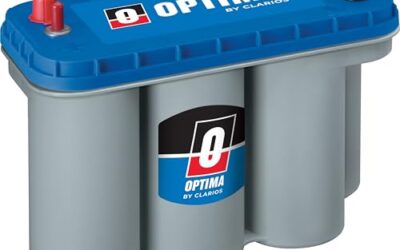
| Renogy Deep Cycle AGM 100Ah | A drop-in swap on a stock charger | 1100A max discharge, sealed AGM |
| Weize 100Ah LiFePO4 Smart BMS | The lowest-cost lithium entry point | Smart BMS, low-temp cutoff |
How to Choose
Count usable amp-hours, not label amp-hours
A lead-acid battery should not be discharged below half its capacity, so a 100Ah AGM gives you about 50 usable amp-hours before its cycle life starts collapsing. A 100Ah lithium iron phosphate battery discharges almost all the way down without damage, so it gives you about 95 usable amp-hours from the same label. That means one lithium battery holds roughly the same usable energy as two AGM batteries of the same size. When you compare options, divide the label capacity by the chemistry: half for AGM and flooded lead-acid, nearly all of it for lithium. The usable number is the one that decides how long your lights, fan, and fridge stay on overnight.
Pick the chemistry for your camping style
Lithium iron phosphate wins on usable capacity, weight, and lifetime: about 24 pounds against 66 for a comparable AGM, and thousands of cycles against a few hundred. AGM wins on simplicity: it works with the converter you already own, needs no special charging profile, and costs far less upfront. Flooded lead-acid wins on raw capacity per dollar in a big bank, but it needs watering, ventilation, and a compartment that can hold its weight. If you camp mostly on hookups and replace a battery every few years, AGM is the easy answer. If you boondock for days at a time, lithium pays for itself in usable energy and lifespan.
Plan for cold-weather charging
Lithium iron phosphate cannot accept a charge below freezing, and charging a frozen cell damages it permanently. Every decent lithium battery has a BMS cutoff that refuses to charge until the cells warm up, which protects the battery but leaves you without charging on a cold morning. Self-heating models solve this by warming the cells on charger power before accepting a charge, so a freezing night does not strand you the next day. If you camp where nights drop below freezing, either buy a self-heating battery or keep the battery in a heated compartment. AGM and flooded batteries charge fine in the cold, which is one real advantage they still hold.
Measure the box and check the charger
RV battery boxes come in BCI group sizes, and a battery that does not fit the box does not fit the RV. Group 24 is the common small tray, Group 27 is a step up, and Group 31 is the large house-bank size, while the compact Renogy Core Mini uses a Group 22NF footprint and needs adapter cables for a standard tray. Measure length, width, and height before ordering, and check the terminal style too. Just as important is the charger: lithium wants a 14.4 to 14.6 volt absorption charge, and many pre-2020 RV converters top out at a 13.6 volt float, leaving a lithium battery permanently undercharged at about 80 percent full.
The 5 Best Options
Renogy Core Mini 100Ah DuoHeat
The Renogy Core Mini DuoHeat is the smallest 100Ah battery in this article, and the only one here that heats itself before charging in freezing weather. Dual heating pads deliver 110 watts of warming power, so the cells reach a safe charging temperature on charger power instead of sitting locked out on a cold morning. At about 21.4 pounds and roughly 9 by 5.4 by 8.4 inches, it slides into tight compartments where a full-size Group 31 battery will not fit, and its 5,000-cycle rating at 80 percent depth of discharge points to a long service life.
Specs
- Battery type: Lithium iron phosphate (LiFePO4)
- Rated capacity: 100Ah at 12 volts, 1280Wh
- Voltage range: 10V to 14.6V
- Maximum charge current: 100A
- Maximum discharge current: 100A
- Peak discharge current: 300A for 5 seconds
- Cycle life: 5000 cycles at 80 percent depth of discharge
- Self-heating: DuoHeat dual pads, 110W
- Protection rating: IP65
- Dimensions: 9.02 x 5.43 x 8.39 inches
- Weight: 21.38 lb
Best for: Campers who need a compact 100Ah lithium battery that still charges on freezing mornings.
Watch out for: The Group 22NF case is smaller than a standard Group 24 or 31 tray, so confirm the fit and the adapter cables before ordering.
LiTime Classic 100Ah Group 31
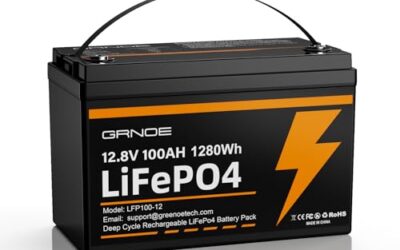
The LiTime Classic is the value pick in this article: a straightforward 100Ah lithium battery in a standard Group 31 case, with a real 100A BMS and a 4,000-plus cycle rating, at the lowest honest cost per cycle here. It drops into the same tray as the AGM it replaces, weighs about 24 pounds against 66 for lead-acid, and expands up to four batteries in parallel and four in series for a larger bank. There is no Bluetooth and no self-heating, so you check state of charge with a separate shunt monitor and you charge where it stays above freezing.
Specs
- Battery type: Lithium iron phosphate (LiFePO4)
- Nominal voltage: 12.8V
- Rated capacity: 100Ah, 1280Wh
- Maximum continuous charge current: 100A
- Maximum continuous discharge current: 100A
- Peak discharge current: 280A for 5 seconds
- Cycle life: 4000-plus deep cycles
- Charging voltage: 14.4V
- Protection rating: IP65
- Dimensions: 13 x 6.77 x 8.43 inches
- Weight: 24.25 lb
- Terminals: M8
Best for: RV owners who want lithium usable capacity and lifetime at the lowest honest price.
Watch out for: No Bluetooth and no self-heating, so add a shunt monitor and charge only above freezing.
Battle Born BB10012
The Battle Born BB10012 is the premium pick, and the one with the longest track record in RV house banks. It is assembled in Reno, Nevada, ETL listed to UL 2054, and backed by a 10-year warranty with US-based support, which is the real reason buyers pay more for the same 100Ah on the label. It is a true drop-in replacement for Group 27 and Group 31 trays, delivers 100 amps continuous discharge, and is rated for 3,000 to 5,000 deep cycles. The standard model has no Bluetooth and no heater, so it suits owners who want a proven battery and do not need app monitoring.
Specs
- Battery type: Lithium iron phosphate (LiFePO4)
- Nominal voltage: 12V
- Rated capacity: 100Ah
- Maximum continuous discharge current: 100A
- Maximum charge current: 50A
- Cycle life: 3000 to 5000 deep cycles
- Dimensions: 12.76 x 6.86 x 8.95 inches
- Weight: 31 lb
- Warranty: 10-year limited warranty
- Safety listing: ETL listed to UL 2054
- Fitment: Group 27 and Group 31 drop-in replacement
Best for: Owners who want a decade of service, a 10-year warranty, and US support behind the battery.
Watch out for: The standard model has no Bluetooth and no self-heating, and its 50A maximum charge current is lower than the 100A rivals here.
Renogy Deep Cycle AGM 100Ah
The Renogy Deep Cycle AGM is the best lead-acid battery in this article, and the honest reason to buy it is simple: it works with the charger you already own, costs far less upfront than lithium, and is sealed and maintenance-free. It self-discharges only 3 percent a month in storage, delivers an 1,100-amp surge for five seconds, and is the top-selling lead-acid battery on Amazon. The catch is the one this whole article is about: 100Ah on the label is about 50 usable amp-hours, because discharging an AGM below half collapses its cycle life.
Specs
- Battery type: Sealed AGM lead-acid
- Nominal voltage: 12V
- Rated capacity: 100Ah
- Maximum discharge current: 1100A for 5 seconds
- Cycle life: About 500 cycles at 50 percent depth of discharge
- Self-discharge rate: 3 percent per month
- Maintenance: Sealed, maintenance-free
- Group size: Group 31
Best for: Buyers who need a drop-in replacement this weekend, or whose charger cannot charge lithium.
Watch out for: Only about 50 usable amp-hours from the 100Ah label, and about 66 pounds to lift into the tray.
Weize 100Ah LiFePO4 Smart BMS
The Weize 100Ah LiFePO4 is the cheapest lithium battery with a real brand name on it in this article, and it undercuts the AGM above by only a small margin while delivering about twice the usable amp-hours and several times the cycles. A built-in smart BMS guards against overcharge, over-discharge, over-current, and short circuits, and a low-temperature cutoff refuses to charge a frozen cell. It fits a standard Group 31 box, weighs about 24 pounds, and carries a 10-year warranty. There is no Bluetooth and no self-heating, so it suits fair-weather charging.
Specs
- Battery type: Lithium iron phosphate (LiFePO4)
- Nominal voltage: 12.8V
- Rated capacity: 100Ah, 1280Wh
- Built-in BMS: Smart BMS with low-temperature cutoff
- Cycle life: 2000 to 3000 deep cycles
- Warranty: 10-year warranty
- Weight: About 24 lb
- Group size: Group 31
Best for: Buyers on a tight budget who want lithium anyway and charge where it stays above freezing.
Watch out for: The cycle rating is 2,000 to 3,000, well short of the LiTime and Renogy lithium picks, and there is no Bluetooth or self-heating.
Which One Fits Your Situation
You camp on hookups and just need a fresh house battery
Pick the Renogy Deep Cycle AGM 100Ah. It drops into your existing Group 31 tray, works with the converter already in your RV, and costs far less upfront than any lithium here. You give up usable capacity and cycle life, but for weekends on shore power that trade is easy to live with.
You boondock for days and want the most energy per dollar
Pick the LiTime Classic 100Ah Group 31. One battery gives you about 95 usable amp-hours, roughly the same as two AGMs, at a quarter of the weight and with thousands of cycles ahead of it. Add a second in parallel later if your trips get longer.
You camp where nights drop below freezing
Pick the Renogy Core Mini 100Ah DuoHeat. Its dual heating pads warm the cells on charger power before accepting a charge, so a freezing morning does not lock you out of charging. Its compact case also fits compartments where a full-size Group 31 battery will not go.
You want to buy once and forget about batteries for years
Pick the Battle Born BB10012. The 10-year warranty, US assembly, and long track record in RV house banks are what you pay for, and its Group 27 and 31 drop-in fit means no tray work. Just remember the standard model has no Bluetooth and no heater.
Common Mistakes
- Buying on label amp-hours alone: a 100Ah AGM gives about 50 usable amp-hours, while a 100Ah lithium gives about 95.
- Ordering before measuring the battery box: Group 24, 27, 31, and 22NF cases are not interchangeable.
- Charging a lithium battery below freezing without self-heating or a low-temperature cutoff, which damages the cells.
- Keeping a pre-2020 converter that tops out at a 13.6 volt float, leaving a lithium battery stuck near 80 percent full.
- Mixing an old battery with a new one, or mixing lithium and AGM in the same bank, which drags the whole bank down to the weakest unit.
Frequently Asked Questions
How many usable amp-hours does a 100Ah deep cycle battery actually give?
It depends on chemistry. A 100Ah AGM or flooded lead-acid battery gives about 50 usable amp-hours, because discharging below half its capacity collapses its cycle life. A 100Ah lithium iron phosphate battery gives about 95 usable amp-hours, since it discharges almost all the way down without damage. Always compare usable amp-hours, not the number on the label.
Can I charge a lithium battery with my old RV converter?
Usually not well. Lithium wants a 14.4 to 14.6 volt absorption charge, and many pre-2020 RV converters top out at a 13.6 volt float, which leaves a lithium battery permanently undercharged near 80 percent full. Budget for a lithium-profile converter or a DC-DC charger, or stick with AGM until you upgrade the charging side.
Do I need a self-heating battery?
Only if you charge where it freezes. Lithium iron phosphate cannot accept a charge below freezing, and a standard BMS simply refuses to charge until the cells warm up. A self-heating battery warms its own cells on charger power first. If you only camp in warm weather, a plain lithium battery with a low-temperature cutoff is enough.
Can I mix lithium and AGM batteries in one bank?
No. Lithium and AGM have different charging voltages, different discharge curves, and different full-charge points, so one chemistry always ends up undercharged or overcharged. Build a bank from identical batteries of the same chemistry, age, and capacity, and replace the whole bank together when the time comes.