Our Short List of 3

- Best for: Repotting several medium planters with one bag of mixed drainage rock.
- 12 pounds mixed lava rocks for plants
- Contains black volcanic rock, red volcanic rock, green zeolite, and maifan stone
- Porous surface lets water and air run through
- Helps plants drain water while absorbing moisture

- Best for: A single small planter or a first attempt at a drainage layer.
- 3-pound mix lava rocks for plants
- Gravel pebbles for bonsai, succulent, and cactus potting soil
- Improves the drainage of potted plants
- Suitable as vase filler and top dressing

- Best for: Large planters and a full repotting session across many containers.
- 18-pound mix horticultural lava rock pebbles
- Pumice potting soil amendment
- Decorative gravel for succulent, cactus, and bonsai
- Supports plant drainage and top dressing
All 4 Picks at a Glance
| Product | Specs | Action |
|---|---|---|
| TOPZEA 12lb Mix Lava Rocks Pebbles |
| Check price on Amazon |
| ANOTHERA 3lb Mix Lava Rocks |
| Check price on Amazon |
| Avalution 18lb Mix Horticultural Lava Rock Pebbles |
| Check price on Amazon |
 FANTIAN 2 lbs Mix Horticultural Succulent Soil |
| Check price on Amazon |
Key takeaways
- Find the best rock for the bottom of planters, from porous lava rock mixes to fine pumice gravel that drains water and keeps roots healthy and thriving.
Putting rock at the bottom of a planter sounds simple, yet the wrong material can make drainage worse instead of better. Smooth river pebbles look tidy but leave little space for water to move, while fine sand packs down and blocks the drain hole entirely. The right rock creates air gaps that let excess water escape, keeps soil from washing out, and gives roots the oxygen they need to stay healthy through wet weather.
This guide is for container gardeners potting up herbs and houseplants, balcony growers working with heavy ceramic pots, and anyone repotting a plant that keeps suffering from soggy roots. Each product below was chosen from the material, particle size, and drainage claims stated on its Amazon listing, so the comparison rests on what the bag actually contains rather than on a generic gardening tip.
Quick Picks
As an Amazon Associate we earn from qualifying purchases
| Product | Best for | Key spec from title |
|---|---|---|
| TOPZEA 12lb Mix Lava Rocks Pebbles | A mixed drainage layer for several pots | 12lb mix lava rocks with volcanic stone |
| ANOTHERA 3lb Mix Lava Rocks | A single small planter or trial pot | 3lb mix lava rocks for potted plants |
| Avalution 18lb Mix Horticultural Lava Rock Pebbles | Filling large planters and raised pots | 18lb mix horticultural lava rock pebbles |
| FANTIAN 2 lbs Mix Horticultural Succulent Soil | Fine gravel for succulents and small pots | 2 lbs mix, 1/4 inch pumice gravel |
How to Choose
Pick porous rock over smooth stone
Porous volcanic rock absorbs a little moisture and releases it slowly, while its rough surface leaves air gaps between pieces that water can flow through. Smooth river pebbles, by contrast, stack tightly and can form a seal that traps water above the drainage layer. Look for lava rock, pumice, or a mixed volcanic blend on the listing, and check that the description mentions drainage or airflow rather than decoration alone. The rock at the bottom of a planter is working material first and decoration second.
Match particle size to the pot
Particle size decides whether the layer drains or clogs. A quarter-inch gravel suits small pots and succulents, where a large chunk would take up too much soil space, while a larger lava rock mix suits big planters where small gravel would wash through the drain hole. Check the listing for the stated size and the bag weight, then picture the layer it will form: two inches of rock in a large pot needs far more material than a thin layer in a windowsill herb pot. Buying the wrong size means either a blocked drain or a pot filled mostly with stone.
Consider the mix, not just one stone
A blend of black and red volcanic rock with green zeolite and maifan stone does more than a single stone type, since each component plays a role: lava rock drains, zeolite holds nutrients, and maifan stone adds minerals. Mixed horticultural gravel also resists compacting over time, which matters in a pot that stays planted for a year or more. Read the ingredients line on the listing and favour a mix that names its components, since an unnamed blend may be mostly filler with little drainage value.
Weigh how much you actually need
Bag weight translates directly into how many planters the purchase covers, and buying too little leaves a thin layer that does not drain, while buying far too much wastes money and storage space. A 2 or 3-pound bag covers one or two small pots, a 12-pound bag handles several medium planters, and an 18-pound bag suits large pots or a full repotting session. Work out the number and size of the planters first, then choose the bag that covers them with a little spare for topping up later.
The 4 Best Options
TOPZEA 12lb Mix Lava Rocks Pebbles
- Best for: Repotting several medium planters with one bag of mixed drainage rock.
- 12 pounds mixed lava rocks for plants
- Contains black volcanic rock, red volcanic rock, green zeolite, and maifan stone
- Porous surface lets water and air run through
- Helps plants drain water while absorbing moisture
Repotting several medium planters with one bag of mixed drainage rock.
The mix varies in particle size, so sieve out the finest dust before use in very small pots.
The TOPZEA mix is the most versatile pick in this group, combining black volcanic rock, red volcanic rock, green zeolite, and maifan stone in a 12-pound bag that covers several medium planters. The porous surface lets water and air run through the layer, which solves the drainage problem that causes root rot in houseplants, while the mix also works as a soil amendment and top dressing. It is a practical choice for a gardener repotting several plants in one session.
Watch out for: The mix varies in particle size, so sieve out the finest dust before use in very small pots.
ANOTHERA 3lb Mix Lava Rocks
- Best for: A single small planter or a first attempt at a drainage layer.
- 3-pound mix lava rocks for plants
- Gravel pebbles for bonsai, succulent, and cactus potting soil
- Improves the drainage of potted plants
- Suitable as vase filler and top dressing
A single small planter or a first attempt at a drainage layer.
The 3-pound bag runs out fast on a large pot, so measure the planter before ordering.
The ANOTHERA 3-pound bag suits a single small planter or a first trial, with a mixed lava rock gravel that improves the drainage of potted plants. Its modest size keeps the cost and storage down for a windowsill herb pot or a single succulent arrangement, and the same gravel doubles as a decorative top dressing. For a gardener who only needs one pot filled, this is the least wasteful option in the group.
Watch out for: The 3-pound bag runs out fast on a large pot, so measure the planter before ordering.
Avalution 18lb Mix Horticultural Lava Rock Pebbles
- Best for: Large planters and a full repotting session across many containers.
- 18-pound mix horticultural lava rock pebbles
- Pumice potting soil amendment
- Decorative gravel for succulent, cactus, and bonsai
- Supports plant drainage and top dressing
Large planters and a full repotting session across many containers.
The bag is heavy, so have a trolley or a second pair of hands ready for delivery day.
The Avalution 18-pound bag is the bulk pick, offering a mix of horticultural lava rock pebbles and pumice that works as a potting soil amendment, a drainage layer, and a decorative gravel. Its size covers large planters, several big pots, or a full afternoon of repotting, and the pumice content keeps the mix light compared with solid stone. For a balcony garden with many containers, the larger bag is the economical way to buy.
Watch out for: The bag is heavy, so have a trolley or a second pair of hands ready for delivery day.
FANTIAN 2 lbs Mix Horticultural Succulent Soil
- Best for: Small succulent and bonsai pots where fine gravel drains without crowding roots.
- 2-pound mix horticultural succulent soil
- 1/4 inch pumice gravel
- Contains lava stone, maifan stone, and green zeolite
- Supports drainage, ventilation, and root growth
Small succulent and bonsai pots where fine gravel drains without crowding roots.
The fine particles can wash through a large drain hole, so cover the hole with mesh first.
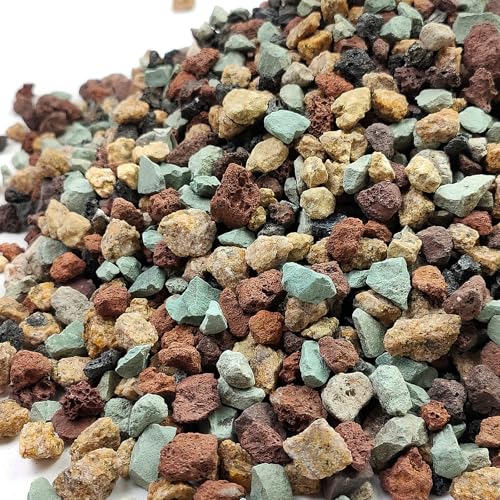
The FANTIAN mix is the fine-grained option, with quarter-inch pumice gravel made from lava stone, maifan stone, and green zeolite in a 2-pound bag. The small particles suit succulents, cacti, orchids, and bonsai in small pots, where a chunky lava rock would crowd the roots, and the mix supports drainage, ventilation, and root growth in a tight container. It also works as a neat top dressing that keeps the soil surface tidy.
Watch out for: The fine particles can wash through a large drain hole, so cover the hole with mesh first.
Which One Fits Your Situation
Several medium houseplants to repot
Choose the TOPZEA 12-pound mix. One bag covers several planters, the blend of volcanic rock, zeolite, and maifan stone drains well and adds minerals, and the leftover gravel works as top dressing. Rinse the mix before use to remove dust that could clog the layer.
One small herb pot on a windowsill
Go with the ANOTHERA 3-pound bag. It fills a single small planter with a proper drainage layer and leaves little spare to store, and the gravel doubles as a tidy top dressing. Add a piece of mesh over the drain hole so the gravel stays in the pot.
A balcony full of large planters
Pick the Avalution 18-pound bag. Its bulk size covers large pots without running out halfway, the pumice keeps the mix lighter than solid stone, and the same gravel can top-dress every pot on the balcony. Keep the spare bag dry between repotting sessions.
Succulents and bonsai in small pots
Choose the FANTIAN 2-pound fine mix. The quarter-inch particles drain well in a tight container without crowding the roots, and the lava, maifan, and zeolite blend supports healthy growth. Use mesh over the drain hole, since fine gravel washes through a wide opening.
Common Mistakes
- Using smooth river pebbles that stack tightly and trap water above the drainage layer.
- Skipping mesh over the drain hole, so fine gravel washes out and soil follows it.
- Filling half the pot with rock, which leaves too little soil for the roots to grow in.
- Choosing a particle size far larger than the pot, so the layer takes up the whole container.
- Never rinsing the rock before use, so fine dust settles and blocks the drain hole.
- Assuming a drainage layer fixes overwatering, when the watering habit itself needs to change.
Frequently Asked Questions
How much rock should go at the bottom of a planter?
A layer of one to two inches is enough for most pots, since the rock only needs to keep the drain hole clear and let excess water escape. Filling half the pot with rock leaves too little soil for the roots and starves the plant. Measure the pot first, then buy the bag size that covers the layer with a little spare.
Does rock at the bottom really improve drainage?
It helps when the rock is porous and the drain hole is open, since air gaps between the pieces let water flow out instead of pooling in the soil. Smooth pebbles that pack tightly can make drainage worse, so porous lava rock or pumice is the better choice. A drainage layer is not a cure for overwatering, which still needs a lighter watering habit.
What is the best type of rock for the bottom of planters?
Porous volcanic rock and pumice are the best choices, because their rough surfaces leave air gaps and their pores hold a little moisture without waterlogging the soil. A mix that adds zeolite and maifan stone brings extra benefits, since zeolite holds nutrients and maifan stone adds minerals. Avoid fine sand, which packs down and blocks the drain hole entirely.
Should I cover the drain hole before adding rock?
Yes, a small piece of mesh or a broken pottery shard over the hole keeps gravel and soil from washing out while still letting water escape. Fine gravel is especially likely to slip through a wide drain hole, so the mesh matters most with quarter-inch mixes. Check the mesh each time you repot, since it can clog with roots and fine soil over a season.