
Key takeaways
- Single person or couple: a small or medium container that holds one standard box.
- Family: a large container, or two smaller ones so a second cereal can be on offer.
- Bulk buyers: an 18-cup class container such as Rubbermaid’s Pantry Cereal Keeper holds bigger bags, and Tupperware’s super storers are aimed at family-size boxes.
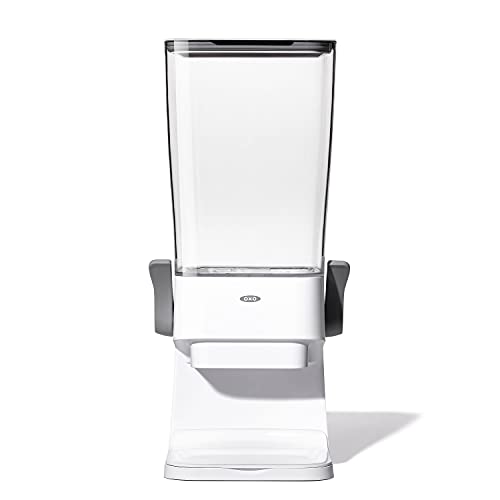
For most households, a flip-top or push-button cereal container with an airtight seal, such as OXO’s POP cereal dispensers, Tupperware’s Super Cereal Storer or Rubbermaid’s Brilliance Pantry Cereal Keeper, is the practical choice, while countertop gravity or twist dispensers suit people who want portion control for cereal, nuts or snacks. All of these sit well under the $150 cap, so the real questions are how much cereal you store, how you want to pour, and how easy the lid is to clean.
The notes below draw on the makers’ own listings for OXO, Tupperware, Rubbermaid, Sistema and Snapware. Several maker pages describe product families more than precise specifications, so where a number or care detail is not shown, this guide says to read the product label.
Our top picks


As an Amazon Associate we earn from qualifying purchases at no extra cost to you.
At a glance: styles and makers
| Style and maker line | What the maker lists | Best for | Limit to know |
|---|---|---|---|
| OXO POP cereal dispensers | Listed in small (2.5 qt), medium (3.4 qt) and large (4.5 qt) sizes, sold singly and in a medium three-piece set, with POP lids that interchange | Everyday cereal with one-handed push-button lid | Care instructions differ by listing, so follow the box |
| Tupperware Super Cereal Storer and Cereal Storers | Flip-top lids with a pour spout, listed singly and as sets | Family-size cereal boxes, baking mixes, pasta | Capacities differ between listings (older Tupperware pages cite about 20 cups, a current retailer listing cites 4.5 L); read the label |
| Rubbermaid Brilliance Pantry Cereal Keeper | Listed as an 18-cup airtight cereal container | Large boxes and bulk cereal | Bigger footprint on shelves |
| Sistema and Snapware pantry containers | Airtight clips (Sistema Ultra and Klip It Plus) and locking-lid canisters (Snapware) | General dry goods, including cereal | Not designed as pour dispensers |
Three dispenser styles explained
Push-button or pop lids
These containers have a lid that opens with one press and a seal that closes the same way. OXO’s POP line is built around this idea, and its cereal dispensers are listed with a pour-friendly shape. They are quick for a morning rush and work well for kids, though the lid mechanism is the part to rinse carefully.
Flip-top pour spouts
Tupperware’s Super Cereal Storer, part of its Modular Mates line, has a flip-top lid with a pour spout. The wide spout lets cereal pour out while the lid keeps the rest sealed. This style also suits dry baking mixes and pasta, because the opening is large enough for chunky foods.
Gravity or twist dispensers
Some countertop dispensers release a measured amount when you twist or press a lever. They suit small pieces such as granola, nuts or small cereal and give portion control, but they generally hold less and are less suited to large flakes. Check the maker’s listing for the size of the opening and what foods it is intended for.
Pick the capacity
- Single person or couple: a small or medium container that holds one standard box.
- Family: a large container, or two smaller ones so a second cereal can be on offer.
- Bulk buyers: an 18-cup class container such as Rubbermaid’s Pantry Cereal Keeper holds bigger bags, and Tupperware’s super storers are aimed at family-size boxes.
Remember that cereal boxes differ in height and shape. Measure your usual box and the shelf before you buy, and check that the container fits under any cabinet.
Airtight seal: what to look for
- Gasket: a silicone ring in the lid or spout is the usual way these containers close airtight. Keep it clean and replace it if it cracks.
- Latches or clips: Sistema’s Ultra and Klip It lines use easy-locking clips with airtight seals; they are better suited to storing than to pouring.
- Fill line: do not overfill beyond any marked line, since the lid may not seal.
- Dry goods only: keep moisture out and let washed parts dry fully before refilling.
An airtight lid helps keep cereal crisp and discourages pests, but it cannot rescue food that is already stale or past its date. Keep the date from the box on a label.
Materials and care
Most of these containers are plastic with silicone seals. Tupperware states its products are BPA free, and Sistema states its containers are BPA-free and dishwasher safe. Care rules vary between lines and sometimes between listings of the same line, so follow the instructions on your box. As a general rule, hand-wash lids with moving parts and let everything dry completely.
Where it lives: countertop or cabinet
- Countertop: choose a clear container with a tidy shape. Keep it away from the stove and out of direct sun.
- Cabinet: pick a stackable shape. Tupperware’s Modular Mates line is described as stackable and modular for pantry organization.
- Kids’ height: a push-button lid at a low shelf lets children serve themselves; supervise pouring with young children.
Budget tiers without naming prices
- Budget tier: a single flip-top or pop-lid cereal container.
- Mid-range tier: a matching set of two or three containers in the same line for several cereals.
- Premium tier: a bundle that pairs cereal dispensers with a full pantry container set. All of these sit within a $150 budget.
Decision table: pick this if…
| Pick this | If you want… |
|---|---|
| OXO POP cereal dispenser | a one-handed push-button lid and matching sizes you can expand into a set. |
| Tupperware Super Cereal Storer | a large flip-top spout for family-size boxes and dry mixes. |
| Rubbermaid Brilliance Pantry Cereal Keeper | an 18-cup airtight container for big boxes and bulk cereal. |
| Sistema Ultra or Snapware canisters | general dry-goods storage where cereal is one of several foods. |
| A twist or gravity dispenser | portion control for small cereals, granola or nuts. |
Alternatives
- Glass jars with clamp lids: long-lasting and good for granola and muesli, though heavy and not built for pouring.
- Original box in a clip bag: the simplest solution if you rotate cereals often.
- Wall-mounted dispensers: useful when counter space is scarce, but they need a secure mounting surface; follow the maker’s instructions.
How to get the most from a cereal container
- Wash and dry first: start with a clean, fully dry container so no moisture is trapped with the cereal.
- Pour, then date it: cut out the best-by date from the box or write it on a label so you know when to finish the contents.
- Do not top up old cereal: finish what is inside before refilling, so older cereal does not sit at the bottom for months.
- Keep the pour clear: crumbs and dust can collect at a spout or hinge. Shake out the container and wipe the spout occasionally.
- Mind the weight: a full large container is heavy. Store it on a shelf that is easy to reach instead of overhead.
- Sticky foods: sugar-coated or clumping cereals can stick in spouts. A wider opening is easier to live with in that case.
Small-kitchen and family tips
In a small kitchen, tall slim containers use less shelf depth than wide ones, and a matching set lines up neatly. In a family with different tastes, two or three medium containers in the same line let each person have a favorite without opening a stack of boxes. Whichever style you choose, a clear body makes it obvious when you are running low, which saves emergency store trips and keeps the pantry tidy.
If you have young children serving themselves, choose a lid they can open and close with one hand and put the container on a low shelf. Spills still happen, so keep a small brush or cloth nearby. Remember that small children should not handle heavy full containers.
What to skip
Avoid containers with a spout so narrow that your usual cereal jams, lids that do not close fully when the container is full, and designs where a hinge or a gasket cannot be removed for cleaning. Also be cautious of any dispenser that needs a wall or cabinet fixing unless you are confident about the surface. Choose a simple design you can wash and refill in under a minute.
Frequently Asked Questions
Do cereal dispensers really keep cereal fresh?
An airtight lid reduces exposure to air and moisture, which helps cereal stay crisp for longer than an open bag. It does not stop cereal from going stale eventually. Seal it after each use and keep it in a cool, dry place.
What size cereal dispenser should I buy?
Match the container to your usual box. Small and medium containers suit single boxes, and an 18-cup class container suits large boxes or bulk cereal. Measure the shelf height first.
Can I put cereal containers in the dishwasher?
That depends on the line and sometimes on the listing. Sistema states its containers are dishwasher safe, while care guidance for lids with moving parts is often to hand-wash. Follow the instructions that came with your container.
Can I use a cereal dispenser for other foods?
Yes, for dry foods. Tupperware notes its cereal storers also suit baking mixes and pasta, and many people use them for rice or snacks. Avoid wet or oily foods that can clog the spout.
Is a pour spout better than a pop lid?
It depends on what you pour. A spout controls the stream and suits large flakes, while a push-button lid is faster to open and close. Try both styles if you can.
How do I stop the lid seal from wearing out?
Wipe the gasket regularly, do not overfill and avoid forcing the lid shut over crumbs. Replace the container or gasket if the seal no longer closes snugly, and follow the maker’s care guide.


