
Key takeaways
- Clear plastic: easy to see through and wipe clean. Look for BPA-free materials, which Tupperware and Sistema both state.
- Dishwasher care: Tupperware states its FridgeSmart containers are dishwasher safe; Sistema lists dishwasher-safe construction. Follow each care card for rack placement.
- Cleaning schedule: empty and wipe fridge organizers regularly. Clean spills promptly so odors do not build up.
- Lids and gaskets: wash the parts you can remove, and dry them fully before closing.
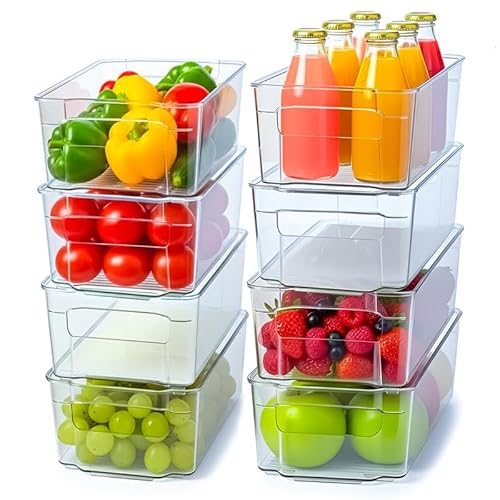
For most fridges, the best organizer is a small set of clear stackable containers and bins: Tupperware’s FridgeSmart vented produce containers suit fruit and vegetables, Sistema’s Klip It Plus and Brilliance containers suit leftovers and meal prep, and YouCopia’s fridge organizers suit bottles, lids and loose items. A well-chosen kit fits comfortably inside the $150 cap, so measure your shelves first and buy to fit.
The notes below come from the makers’ own pages for Tupperware, Sistema and YouCopia. Where a page did not state a dimension or care detail, this guide says so and tells you to follow the label.
Our top picks



As an Amazon Associate we earn from qualifying purchases at no extra cost to you.
At a glance: systems compared
| System | Stated features | Best for | Limit to know |
|---|---|---|---|
| Tupperware FridgeSmart (starter sets, vertical and deep sizes) | ACE venting system, adjustable airflow slider, built-in produce guide, stackable design; made from BPA-free materials; dishwasher-safe containers | Fresh produce | Containers are for the fridge, not for heat; the maker says to follow its care guide |
| Tupperware Freezer Mates Plus | Listed as a freezer organization set | Freezer space | Not a fridge-shelf organizer |
| Sistema Klip It Plus | Modular stacking shape for pantry, fridge and freezer; clips with flexible or leak-proof seals | Leftovers, prepped ingredients | Check each set’s care card for microwave and freezer rules |
| Sistema Brilliance | Described as 100% leak proof, with built-in microwave vents under the clips (open the clips when heating) | Sauces, soups and stews | Mostly smaller sizes |
| YouCopia fridge and pantry organizers | Fridge organizer collection; StoraLid lid organizer; UpSpace bottle organizer in 6, 9 and 12 bottle sizes; SpiceStack spice organizer (18 bottle) | Bottles, lids, small jars | Check dimensions on the product page |
Measure before you buy
- Measure the width, depth and height of each shelf, and note any door bins.
- Check how much space sits above each shelf; many fridges have shelves that adjust.
- Decide the main problem: produce spoiling, leftovers piling up, bottles falling over, or loose small items.
- Choose one or two systems that solve that problem instead of buying a bit of everything.
Fridge shelves vary a lot between brands, and a container that fits one model may not fit another. If your fridge is shallow or narrow, choose smaller stackable pieces.
Produce containers with vents
Tupperware’s FridgeSmart line is built around controlling airflow. The maker lists an ACE venting system, an adjustable slider on the lid, a built-in produce guide and a stackable design intended to save space and reduce waste. The 4-piece starter set is listed with two Small Deep containers (7 cups or 1.8 L each), one Medium Deep container (1 gallon or 4.4 L) and one shallower Medium container, each with a matching lid. The maker states the materials are BPA free and that the containers are dishwasher safe, and listings say the set is not freezer or microwave safe, so keep it for the fridge.
Follow the maker’s guide for which foods suit which vent setting, and note that some produce is better kept out of the fridge entirely. Tupperware also lists vertical and larger deep sizes for tall items.
Containers for leftovers and prep
Sistema lists Klip It Plus as a modular stacking shape that uses pantry, fridge and freezer space efficiently, with easy-locking clips and a flexible seal, and Brilliance as 100% leak proof with microwave vents under the clips. Both are useful for stacking leftovers in a neat grid. Sistema’s care guidance says to open the clips when microwaving so steam can escape, and Klip It Plus is listed as microwave safe without the lid. Sistema’s pages list dishwasher-safe, BPA-free and freezer and fridge-safe options across its lines, but not every set carries every rating. Follow each set’s care card, since microwave rules usually apply to the container without the lid.
Bottles, lids and small items
YouCopia lists a fridge organizer collection with products that include an UpSpace bottle organizer in 6, 9 and 12 bottle sizes, a StoraLid container lid organizer in 24-lid and 40-lid capacities and a SpiceStack spice organizer in an 18 bottle size. A spice organizer belongs in a cabinet rather than the fridge. Bottle organizers help drinks stop rolling around, and a lid organizer is more useful in a cabinet than in a fridge. Check each product page for dimensions before buying.
Material and cleaning
- Clear plastic: easy to see through and wipe clean. Look for BPA-free materials, which Tupperware and Sistema both state.
- Dishwasher care: Tupperware states its FridgeSmart containers are dishwasher safe; Sistema lists dishwasher-safe construction. Follow each care card for rack placement.
- Cleaning schedule: empty and wipe fridge organizers regularly. Clean spills promptly so odors do not build up.
- Lids and gaskets: wash the parts you can remove, and dry them fully before closing.
Food-safety basics
An organizer helps you see what you have, but it does not change how long food stays safe. General food-safety guidance commonly advises keeping the fridge at about 40 degrees Fahrenheit (4 degrees Celsius) or below, storing raw meat on the lowest shelf in a leak-proof container and not leaving perishables out for more than about two hours. If a container shows damage or an odor that will not wash out, replace it.
Budget tiers without naming prices
- Budget tier: a pack of clear stackable containers from a line such as Sistema Klip It Plus, or one or two bottle organizers.
- Mid-range tier: a starter set of vented produce containers, such as a FridgeSmart starter set, plus a few leftover containers.
- Premium tier: a larger set of vented produce containers plus bottle organizers and freezer organization. All of these tiers fit inside the $150 cap.
Decision table: pick this if…
| Pick this | If you want… |
|---|---|
| Tupperware FridgeSmart | vented containers for produce, with a built-in guide. |
| Sistema Klip It Plus | stackable containers for leftovers and prepped food that also work in the pantry and freezer. |
| Sistema Brilliance | leak-proof containers for sauces and soups, with microwave vents. |
| YouCopia UpSpace | a bottle organizer in a 6, 9 or 12 bottle size. |
| Tupperware Freezer Mates Plus | freezer organization rather than fridge shelf organization. |
Alternatives
- Open bins with handles: simple stackable bins let you pull a whole category out at once.
- Lazy Susan turntables: useful for jars and sauces in deep shelves; check the diameter against your shelf.
- Labels and zones: assigning a shelf to each food group costs nothing and works with any container set.
A simple zone layout for most fridges
- Top shelf: ready-to-eat foods, drinks and leftovers in clear, labeled containers.
- Middle shelves: dairy, eggs and prepped ingredients, with bins so small items do not get lost.
- Bottom shelf: raw meat and fish in sealed, leak-proof containers so nothing drips onto other food.
- Drawers: fruit and vegetables, using vented containers if you want to try that approach and following the maker’s guide for each food.
- Door: condiments, jars and bottles, which a bottle organizer can keep upright.
Keep a gap between containers so air can circulate. Overpacking a fridge can make it harder to hold a steady temperature, and an organizer that blocks vents or the back wall defeats its purpose. If you can, use the oldest items first by placing them at the front, and give leftovers a date label so nothing is forgotten.
Common fridge organizing mistakes
- Buying large containers before measuring shelf height, so they will not fit.
- Washing produce before storing it, which can speed up spoilage; follow the maker’s tips if you use vented containers.
- Letting spills sit on shelves or liners.
- Stacking containers so tall that the bottom ones are never reached.
Small fridge and large fridge tips
In a compact fridge, favor narrow stackable containers and a single bottle organizer, and keep the door for condiments only. In a large or side-by-side fridge, use bins to keep deep shelves from swallowing small items, and pull-out style bins so the back is reachable. In either case, choose containers in one or two matching sizes, because uniform shapes stack tightly and reduce wasted space.
Frequently Asked Questions
What is the best way to organize a refrigerator?
Group foods by type, give each group a bin or container, and keep similar items together. Put raw meat on the lowest shelf in a sealed container and keep ready-to-eat foods above it. Measure shelves first so the containers fit.
Do vented produce containers really help?
Tupperware states that its ACE venting system and adjustable slider regulate airflow, and it publishes a produce guide for each vent setting. Results depend on the food, the fridge and how you pack it. Follow the maker’s guide and use the oldest produce first.
Are fridge organizers dishwasher safe?
Tupperware states its FridgeSmart containers are dishwasher safe, and Sistema lists dishwasher-safe construction. Other organizers, such as bins and turntables, vary, so check the care instructions before washing.
How do I know what will fit in my fridge?
Measure each shelf’s width, depth and clearance height, then compare with the dimensions on the product page. Allow a little extra space so you can slide containers in and out. Door bins have their own depth limits.
Can I stack containers in the fridge?
Many are designed to. Tupperware describes FridgeSmart as stackable, and Sistema describes Klip It Plus as modular and stackable. Keep heavier containers on the bottom and make sure vents are not blocked.
Should I put everything in containers?
No. Items that are already well packaged, such as jars and bottles, are better corralled in a bin. Use containers for open produce, leftovers and prepped ingredients, and label them with the date.


