Key takeaways
- Two moldable radiator hoses compared for cars: flexible Gates and Dayco hoses by inside diameter, length, bend, material, and temperature range.
A molded radiator hose only works when the factory shape still exists and still matches your engine bay. On older cars, classic trucks, and engine swaps, that shape is often discontinued, bent out of reach by a different radiator, or blocked by a new component. That is the real decision behind a moldable radiator hose: whether a flexible hose you can bend by hand will hold its shape, keep full flow, and seal at both ends without collapsing under suction. Measure both hose ends, the run length, and the tightest turn before you order anything.


This guide is for do-it-yourself owners replacing a cooling hose on an older vehicle, classic truck owners who cannot find the original molded part, and builders routing hoses around a swapped engine. The two hoses below were picked from their Amazon listing titles and published specifications, with inside diameter, length, material, and temperature range checked against the listing for each part.
Quick Picks
As an Amazon Associate we earn from qualifying purchases
| Product | Best for | Key spec from title |
|---|---|---|
| Gates 25804 Vulco-Flex II Flexible Coolant Hose | A 1-1/2-inch run that needs a 90-degree bend | 1-1/2-inch ID, 20-inch centerline length |
| Dayco 81041 Flexible Radiator Hose | A shorter 1-1/4-inch run in a tight engine bay | 1-1/4-inch ID, 14-3/4-inch length |
How to Choose
Inside Diameter at Both Ends
Both ends of the hose must match the necks they slide onto, and the two ends are not always the same size. A hose that is slightly too large will not seal, while a hose that is too small will not slide on without force that can split the rubber. Measure the outside diameter of the radiator neck and the engine outlet with calipers, then match those numbers to the inside diameter printed in the listing. The Gates hose in this guide measures 1-1/2 inches at both ends, while the Dayco hose measures 1-1/4 inches at both ends. If your two necks differ, look for a hose with different end sizes rather than forcing a single-size hose onto mismatched necks.
Length and the Bend You Need
Length decides whether the hose reaches both necks without stretching or sagging. A hose that is too short pulls and can slip off when the engine rocks, while a hose that is too long sags and rubs against a fan or belt. Measure along the path the hose will follow, not in a straight line between the two necks, and allow for every curve in that path. The Dayco hose here runs 14-3/4 inches, which suits a short upper run, while the Gates hose runs 20 inches and carries a formed 90-degree bend. Match the bend too: a formed bend holds its shape, while a straight flexible hose needs a gentle curve and enough room to make it.
Temperature Range and Material
Coolant hoses live in heat, ozone, and constant contact with coolant, so the material and the temperature limit matter as much as the size. Both hoses in this guide use EPDM rubber, which resists heat, ozone, and coolant, and both carry a top temperature of 257 degrees F. The Gates hose adds a steel reinforcement layer, while the Dayco hose uses a knitted reinforcement inside the EPDM wall. Check the temperature limit in the listing against your engine, and remember that a hose running near a hot exhaust manifold or turbocharger faces more heat than the coolant alone. A hose that softens or swells under heat is telling you the material or the routing is wrong for that spot.
Collapse Resistance and Clamps
A lower radiator hose works under suction, so a hose without internal support can flatten and choke coolant flow just when the engine needs it most. Look for a wire coil, a steel layer, or corrugations that hold the hose open under vacuum. The Gates hose uses a steel-reinforced wall, and the Dayco hose uses corrugations plus knitted reinforcement to resist flattening. Clamps matter just as much: old clamps lose tension, and a new hose deserves new clamps sized to its outside diameter. Fit the clamps over the raised bead of each neck, tighten them evenly, and recheck them after the first warm-up, when heat has let the rubber settle.
The 2 Best Options
Gates 25804 Vulco-Flex II Flexible Coolant Hose
The Gates 25804 Vulco-Flex II suits a 1-1/2-inch cooling run that has to make a 90-degree turn. Its listing describes a flexible hose built to bend in almost any direction, with a steel-reinforced EPDM body and an improved sealing surface for leak resistance. At 20 inches on the centerline, it covers longer runs between a radiator and an engine outlet that do not sit in a straight line. The 90-degree bend is already formed, so the hose holds that turn without the kink a straight hose would develop. Check that both of your necks measure 1-1/2 inches before ordering, and confirm the run has room for a 20-inch hose.
Specs
- Brand: Gates
- Part number: 25804
- Type: Vulco-Flex II Flexible Coolant Hose
- Inside diameter, both ends: 1-1/2 inches (38 mm)
- Centerline length: 20 inches (508 mm)
- Bend: 90 degrees, already formed
- Material: EPDM with steel reinforcement
- Temperature limit: up to 257 degrees F (125 degrees C)
- Standard: SAE 20R5 Class D-2
- Sealing surface: Improved sealing surface for leak resistance
- Use: Coolant only; not for fuel or oil transfer
Best for: A 1-1/2-inch run that needs a formed 90-degree turn.
Watch out for: The bend is already formed, so this hose suits a run with that turn; a straight run or a different angle needs a different part. One retailer catalog lists this part as molded while other Vulco-Flex II parts are listed as not molded, so confirm the 90-degree bend in the listing before ordering.
Dayco 81041 Flexible Radiator Hose
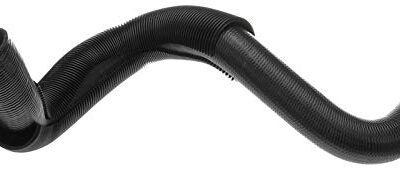
The Dayco 81041 fits a shorter 1-1/4-inch run where the routing bends but the factory molded hose is gone. Its corrugated body bends without flattening, and the knitted reinforcement plus synthetic EPDM construction is built to resist splitting, ballooning, and elongation. At 14-3/4 inches long, it suits compact engine bays and upper hose positions where a longer hose would bunch up or rub against nearby parts. The listing states it is designed to replace straight or molded radiator hoses when routing allows, which makes it a practical pick for older cars. Confirm both necks measure 1-1/4 inches and that the run is close to 14-3/4 inches.
Specs
- Brand: Dayco
- Part number: 81041
- Type: Flexible Radiator Hose
- Inside diameter, both ends: 1-1/4 inches (32 mm)
- Length: 14-3/4 inches
- Material: Synthetic EPDM with knitted reinforcement
- Temperature range: -40 degrees F to +257 degrees F (-40 degrees C to +125 degrees C)
- Standard: SAE J20R4, Class D-2
- Design: Corrugations for flexibility without flattening or collapse
- Use: Coolant only; not for fuel or oil transfer
- Position: Listed as an upper hose for many vehicles; confirm fitment for your vehicle
Best for: A shorter 1-1/4-inch upper run in a compact or older engine bay.
Watch out for: A run much longer than 14-3/4 inches will leave this hose stretched or short at one end, so measure the full path first. This hose is not suitable for fuel or oil transfer.
Which One Fits Your Situation
Your Run Needs a 90-Degree Turn
Choose the Gates 25804 when the hose must turn a sharp corner between the radiator and the engine. Its formed 90-degree bend holds the turn without kinking, and the 20-inch centerline length covers a longer run. Measure both necks first: they must be 1-1/2 inches. If the turn is gentler or the run is straight, the formed bend works against you, and a straight flexible hose shaped by hand fits better.
Your Engine Bay Is Tight and the Hose Is Short
Choose the Dayco 81041 when the run is short and the space around it is crowded. At 14-3/4 inches, it fits a compact upper run without bunching up or rubbing nearby parts, and its corrugations let it bend without flattening. Both necks must measure 1-1/4 inches. If the run is longer than 14-3/4 inches, this hose will end up stretched, so measure the full path along its curves before you order.
You Are Routing a Custom or Swapped Engine
Choose the Gates 25804 when a swapped engine or a different radiator has moved the connection points. Its 20-inch length and ability to bend in almost any direction let it bridge gaps a factory hose cannot, and the steel-reinforced wall holds its shape under suction. Map the route first, keep the hose clear of fans, belts, and hot exhaust parts, and confirm both necks are 1-1/2 inches.
Your Original Molded Hose Is Discontinued
Choose by size when the factory hose is gone and no molded replacement exists. If both necks measure 1-1/4 inches, the Dayco 81041 covers the shorter runs; if they measure 1-1/2 inches, the Gates 25804 covers the longer runs with a turn. Either hose replaces a straight or molded hose when routing allows, so match the diameter and the length to your run and fit new clamps.
Safety Notes
- Never open a radiator cap or reservoir cap while the engine is hot; hot coolant under pressure can spray out and cause severe burns.
- Let the engine cool fully before draining coolant or removing a hose.
- Engine coolant is toxic, so keep it away from children and pets, and clean up spills at once.
- These hoses carry coolant only; do not use them for fuel or oil transfer.
- Fit new clamps with a new hose, and check the hose ends for leaks after the first warm-up.
Common Mistakes
- Ordering by vehicle year alone without measuring both necks, then finding the hose will not slide on or seal.
- Picking a hose that is too long and letting it sag onto a fan, a belt, or a hot exhaust part.
- Reusing old clamps that have lost tension instead of fitting new ones sized to the hose.
- Forcing a tight bend that kinks the hose and chokes coolant flow.
- Opening the radiator cap while the engine is hot, or topping up with the wrong coolant for the vehicle.
Frequently Asked Questions
What is a moldable radiator hose?
A moldable radiator hose is a flexible coolant hose you can bend by hand to follow the route between the radiator and the engine. Unlike a factory molded hose with a fixed shape, it uses a corrugated body, a wire coil, or a steel-reinforced wall to hold a bend without flattening. It suits older vehicles and custom builds where the original molded hose is gone or the routing has changed.
Can a flexible hose replace a molded hose?
Yes, when the routing allows it. The Dayco listing states its flexible hose is designed to replace straight or molded radiator hoses, and the Gates Vulco-Flex II is built to replicate the angles of factory hoses. Match the inside diameter at both ends and the length, then shape the hose along the route and check that it does not kink, rub, or sit against hot parts.
What size moldable radiator hose do I need?
Measure the outside diameter of both necks the hose must join, and match those numbers to the inside diameter in the listing. Then measure the run along the path the hose will follow, including every curve. The Dayco hose is 1-1/4 inches by 14-3/4 inches, while the Gates hose is 1-1/2 inches by 20 inches. If your two necks differ in size, look for a hose with different end sizes.
Do I need new clamps with a new radiator hose?
Yes. Gates recommends replacing clamps each time a new coolant hose is fitted, because old clamps lose tension and may not seal on a fresh hose. Choose clamps sized to the outside diameter of the new hose, seat them over the raised bead of each neck, and tighten them evenly. Recheck the clamps after the first warm-up, and look for any sign of coolant at the hose ends.